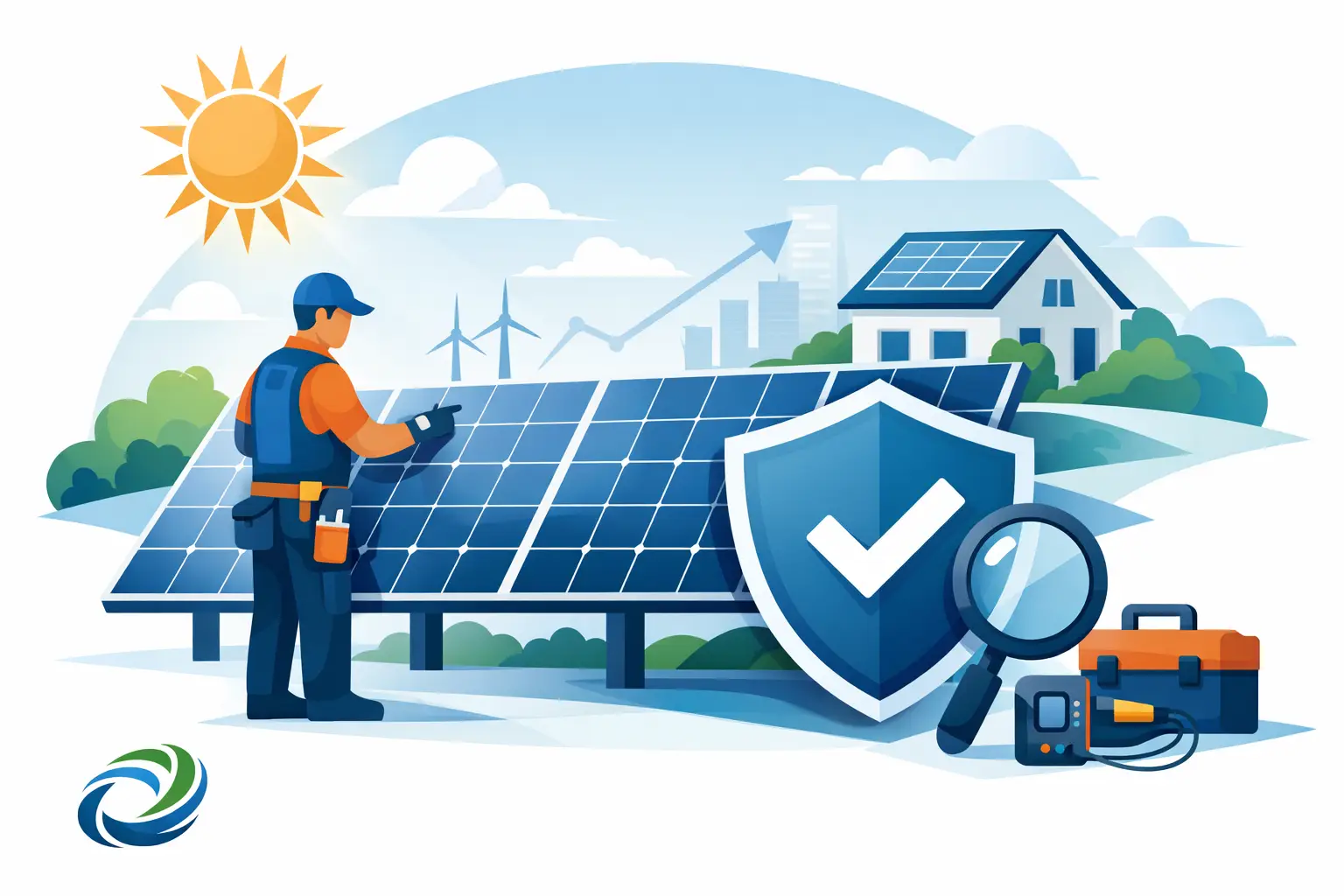
A solar system should not become a mystery once the installation team leaves. Solar maintenance services give homeowners and businesses a clear view of how their system is performing, help catch small issues early and protect the savings that made solar such a smart investment in the first place.
For most properties, solar panels need very little day-to-day attention. There are no moving parts on the roof, and quality equipment is built to work through British weather. But low maintenance is not the same as no maintenance. Your inverter, isolators, cabling, mounting system and monitoring all need to keep working together safely if you are to generate the power your system was designed to deliver.
What do solar maintenance services include?
Professional maintenance is more than a quick look at the panels from the ground. A proper visit considers the whole system, from roof fixings to the data coming through your monitoring platform.
An engineer will typically inspect the visible condition of the panels and mounting equipment, checking for damage, movement, corrosion or signs that weather has affected the installation. They will also assess cabling and electrical connections, look at the inverter for warning lights or fault codes, and confirm that isolators and safety labels remain in good order.
Performance is equally important. A system can appear fine while generating less electricity than expected. By reviewing generation figures against the system design, the season and recent weather conditions, an experienced engineer can identify a potential issue that may otherwise go unnoticed for months.
For systems with battery storage, maintenance should also include a review of battery status, charging behaviour and settings. A battery that is not charging at the right times, or is operating with outdated preferences, can reduce the value you get from your solar generation and tariff.
Why maintenance protects more than your panels
The obvious reason to book maintenance is to maintain energy production. If one part of a system develops a fault, the impact can be larger than it first appears. An inverter issue, a tripped isolator or a monitoring fault may mean your panels are producing far less electricity than they should – or none at all.
There is also a safety and compliance element. Solar is an electrical installation, and it should be treated with the same care as any other important part of your property. Periodic checks can spot wear, water ingress around equipment, pest-related cable damage or loose components before they become more costly problems.
For commercial sites, this matters even more. Reduced generation can affect operating costs across the business, while unexpected downtime is inconvenient to investigate during busy periods. Planned maintenance provides a useful record of system condition and can support facilities teams in managing assets responsibly.
Maintenance can also protect your peace of mind. A homeowner should not have to guess whether a lower bill is down to cloudy weather, higher household use or an underperforming solar system. Clear reporting turns uncertainty into practical information.
How often should a solar system be checked?
There is no single answer for every property. The right maintenance schedule depends on the system’s age, size, location, equipment, access and whether it includes a battery. As a general rule, an annual professional health check is a sensible approach for many residential systems, particularly once the first year of operation has passed.
A commercial system may need a more structured schedule, especially where there are multiple arrays, high energy demand or monitoring requirements. Sites near the coast, beneath heavy tree cover, close to agricultural activity or in areas with significant bird activity can also benefit from more frequent visual inspection.
Monitoring helps bridge the gap between visits. If your system has an app or online portal, it is worth checking it occasionally rather than waiting for an annual appointment. You do not need to study every graph. Look for a sudden drop in generation, persistent alerts, an inverter showing offline, or figures that seem unusual compared with similar weather periods.
If you see a warning message, do not climb onto the roof or open electrical equipment yourself. Note the message, check whether the inverter display is active and arrange professional advice. Quick action can limit lost generation and prevent a minor fault from becoming a bigger repair.
Do solar panels need cleaning?
This is one of the most common questions around solar maintenance services. In many cases, rain will remove ordinary dust and light surface dirt, so routine panel cleaning is not automatically necessary. Cleaning every panel simply because it exists can add cost without producing a meaningful improvement in output.
However, there are situations where cleaning is worthwhile. Persistent bird droppings, thick pollen, nearby construction dust, salt residue, lichen or debris from overhanging trees can shade parts of a panel and reduce performance. The key is evidence, not assumption.
A professional inspection can help determine whether soiling is genuinely affecting generation. If cleaning is recommended, it should be carried out safely using methods suitable for solar panels. Abrasive materials, harsh chemicals and high-pressure washing can damage surfaces, seals or fixings. Roof access carries its own risks too, so this is not a job to treat as a weekend DIY task.
Signs your system may need attention sooner
Your monitoring is often the first clue, but it is not the only one. An inverter fault code, repeated notifications, a display that is blank during daylight hours or a noticeable and unexplained fall in generation all justify investigation.
You may also notice physical changes from ground level, such as obvious debris on panels, nesting birds beneath the array or damage after severe wind. If the system has recently experienced a power cut, electrical work or a change to your internet connection, monitoring may need to be reconnected even when solar generation itself is unaffected.
For battery owners, unusual behaviour can include the battery not charging from solar when expected, exporting energy when you would prefer to store it, or failing to provide backup power where that feature has been installed. Some issues are settings-related and straightforward to resolve, while others require a technical inspection. The important thing is not to ignore a pattern.
Choosing a provider for solar maintenance services
The lowest price is not always the best value. A useful maintenance visit should be carried out by engineers who understand the electrical, structural and performance sides of a solar installation. They should be able to explain what they have checked, what they found and whether any work is recommended now or simply worth monitoring.
Ask whether the provider can review system data as well as inspect equipment. Check that they have appropriate experience with your inverter and battery brand, and that any remedial work is clearly priced before it begins. For systems still covered by manufacturer or installation warranties, it is also sensible to confirm that the proposed work will not affect cover.
At Infused Solar Energy, aftercare is part of the full journey, not an afterthought. The aim is simple: help you understand your system, respond quickly when something does not look right and keep your investment working towards lower energy costs.
A practical plan for owners
Between professional visits, keep the task simple. Check your monitoring from time to time, keep a record of alerts, and make sure tree growth does not create new shade across the array. If you change broadband equipment or passwords, remember that your monitoring connection may need updating.
Avoid touching rooftop equipment, opening electrical enclosures or attempting repairs yourself. Solar systems operate with electrical voltages that require proper training and safe isolation procedures. Calling a qualified engineer is the safer and more cost-effective decision.
Good solar ownership is not about constantly worrying over your panels. It is about giving a valuable home or business asset the occasional expert attention it deserves, so you can keep generating, storing and using more of your own clean energy with confidence.