A lot of homeowners are happy with the idea of solar until they realise one awkward detail: much of the electricity their panels generate arrives when they are out of the house. That is exactly where battery storage systems for homes start to make real financial sense. Instead of exporting excess power during the day and buying electricity back at a higher rate in the evening, a battery lets you keep more of what you generate and use it when your household actually needs it.
For many UK households, that shift is the difference between simply having solar panels and truly owning their energy. A well-matched battery can reduce reliance on the grid, improve the value of a solar installation, and offer more predictability at a time when electricity prices remain a concern. It is not the right answer for every property, but for the right home, it can be one of the smartest upgrades you can make.
What battery storage systems for homes actually do
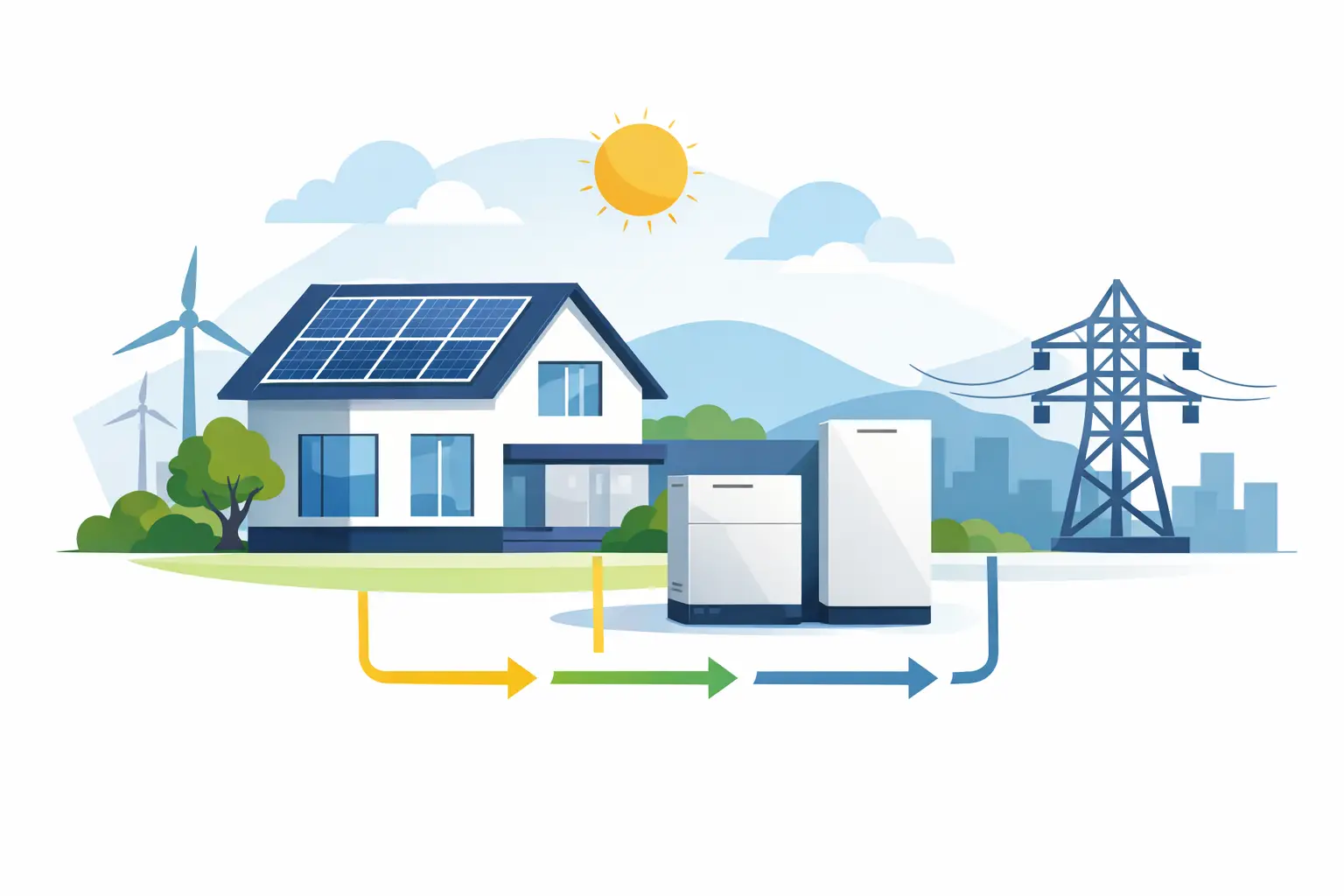
In simple terms, a home battery stores electricity for later use. Most commonly, that electricity comes from solar panels. During daylight hours, if your panels produce more power than your home is using, the surplus can charge the battery instead of being sent straight to the grid. Later, when the sun has gone down or your usage increases, the battery discharges that stored energy back into the home.
That sounds straightforward, and in practice it usually is. The real value is in timing. Electricity is most useful when it matches your household demand, not just when it is generated. A battery helps close that gap.
Some systems can also be charged from the grid when tariffs are lower, then used during peak periods when electricity costs more. Whether that is worthwhile depends on your tariff, your usage patterns and the battery controls available. This is why good system design matters. The battery itself is only part of the picture.
Why more UK homeowners are considering battery storage
The main driver is still cost control. Households want lower bills, but they also want more certainty. A battery cannot make you fully independent from the grid in most cases, but it can give you more control over when you buy electricity and how much of your solar generation you keep.
There is also a practical side to it. Many people are at work during the middle of the day, which means a standard solar-only system may export a fair amount of generation. That is not necessarily a problem, but it does limit how much direct benefit you feel at home. Adding battery storage can improve self-consumption and make the system work harder for your lifestyle.
For some homeowners, the appeal is resilience. Certain battery setups can offer backup power for selected circuits during a power cut, although not every system does. This is one of those areas where assumptions can catch people out. Backup capability often requires specific equipment and careful planning, so it should be discussed from the start rather than treated as a default feature.
Is a battery always worth it?
Not always, and it is better to be honest about that.
If your home uses a lot of electricity during the daytime, you may already be consuming most of your solar generation directly. In that case, the financial benefit of adding a battery might be smaller than expected. Equally, if your energy demand is quite low, the payback period may be longer.
On the other hand, if you are out during the day, use more electricity in the evenings, or want to maximise the value of your solar investment, a battery often becomes much more attractive. Homes with heat pumps, electric vehicle charging, or consistently high electricity bills may also see stronger value, depending on how the system is configured.
The key point is that battery storage systems for homes should be sized around actual usage, not guesswork. Bigger is not always better. An oversized battery can add cost without delivering proportionate savings, while an undersized one may leave useful solar energy on the table.
What to look for in a home battery system
Capacity gets most of the attention, but it is not the only figure that matters. Capacity tells you how much energy the battery can store, usually in kilowatt-hours. Useful, yes, but performance also depends on power output, depth of discharge, round-trip efficiency and how intelligently the system manages charging and discharging.
In practical terms, homeowners should care about how the battery fits daily life. Can it cover your evening usage for a meaningful period? Can it work well with your inverter and solar array? Does the monitoring make sense, or is it full of data but short on clarity?
Warranty matters too. A battery is a long-term investment, so you want clear information on product lifespan, performance guarantees and who supports the system after installation. This is where working with an experienced installer makes a real difference. A professional design and installation should give you confidence not just on day one, but years down the line.
Solar first, battery second, or both together?
For many households, the most efficient route is to install both at the same time. That allows the whole system to be designed as one package, with the inverter, battery size and panel output matched properly from the outset. It can also make installation simpler and more cost-effective.
That said, adding a battery to an existing solar system is often possible. If you already have panels and want to increase self-use, a retrofit battery may be the right next step. Whether that works smoothly depends on the age of your current system, the inverter setup and your available space.
This is one reason bespoke design matters. No two homes use electricity in exactly the same way. A good installer should look at your roof, your current generation, your household usage profile and your goals before recommending a solution.
Installation, space and day-to-day use
Most homeowners are pleasantly surprised by how straightforward battery installation can be. In many cases, the battery is wall-mounted and installed in a garage, utility room or another suitable internal or sheltered location. The exact placement depends on product requirements, ventilation, access and safety considerations.
Day to day, there is very little for you to manage. Once set up correctly, the system should work automatically in the background. Monitoring apps can show generation, battery charge and household consumption, but the goal is not to give you another job. It is to make your energy use easier to understand and cheaper to manage.
If you are choosing an installer, support matters just as much as the hardware. You want clear handover, sensible explanations and the reassurance that help is there if you need it later. For a family-run business like Infused Solar Energy, that personal service is part of the value, not an extra.
Common misunderstandings about battery storage systems for homes
One of the biggest is the idea that a battery will wipe out your electricity bill entirely. For most homes, that is unrealistic. A battery reduces grid reliance, but it does not remove it. Winter generation is lower, and high-demand appliances can still outpace what the battery can supply.
Another misunderstanding is that every battery provides full-home backup in a power cut. As mentioned earlier, that depends on system design. Some batteries offer no backup at all. Others can support only selected circuits. If resilience is a priority, it needs to be built into the specification.
There is also a tendency to focus only on battery size. In reality, the best-performing systems are usually the ones that are well designed rather than simply large. Smart controls, good inverter compatibility and realistic expectations often matter more than chasing the biggest number on a brochure.
Making the decision with confidence
If you are comparing options, the right question is not just, “How much does a battery cost?” It is, “How will this system perform in my home?” That means looking at your daytime usage, evening demand, solar generation potential and how long you plan to stay in the property.
A strong proposal should be clear, not confusing. It should explain expected savings, outline any limitations and show how the battery fits into your wider energy goals. If the recommendation feels generic, it probably is.
The smartest home investment is rarely the one with the loudest sales pitch. It is the one designed properly, installed professionally and supported well after the job is done. If battery storage is right for your property, it should leave you with lower bills, better control and the quiet confidence that more of your energy is working for you, not the grid.