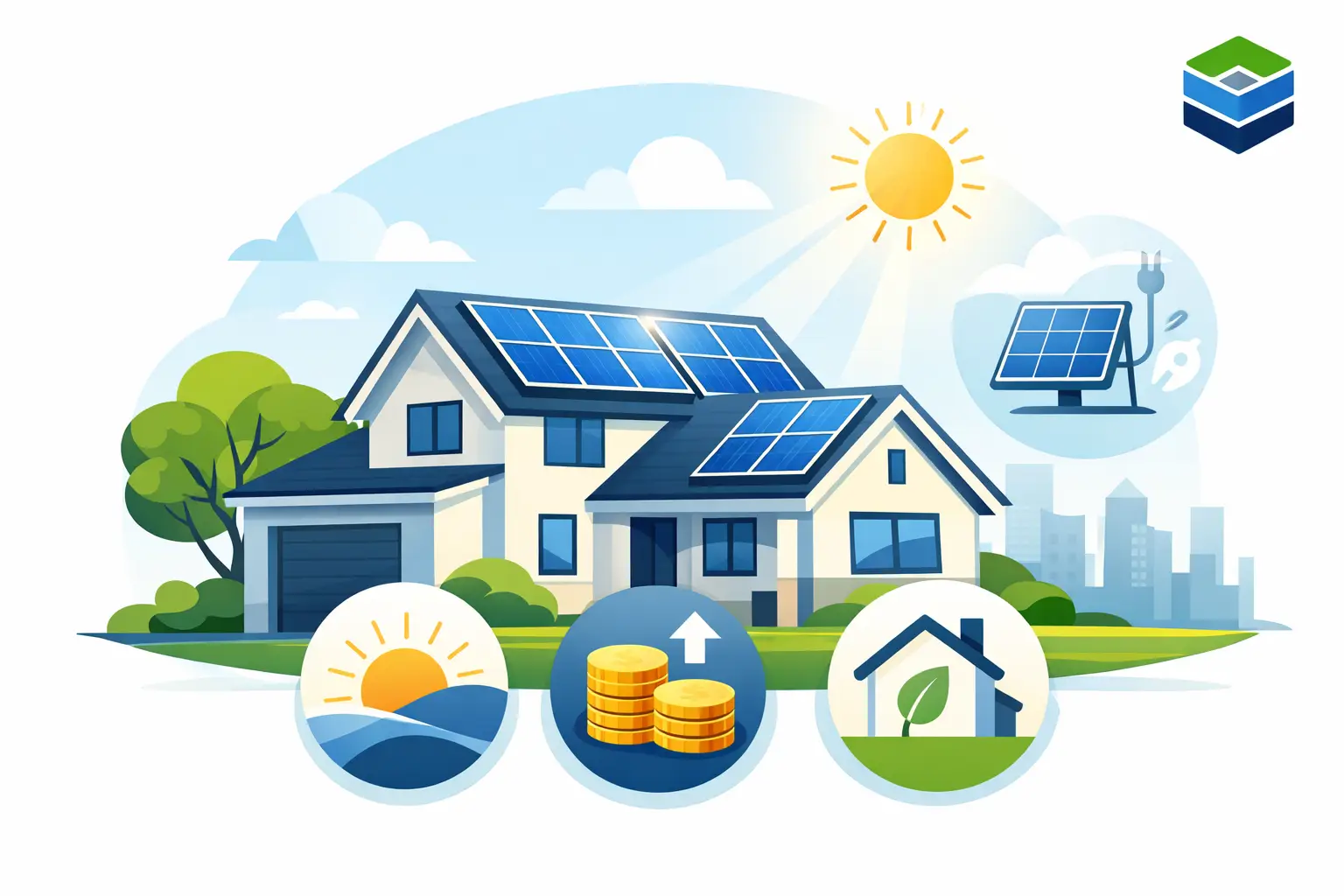
A detached home often gives you something solar needs most: options. A larger roof, fewer shared structures and more flexibility around cable routes can make solar panels for detached homes a particularly strong investment. But a bigger property does not automatically mean a bigger system is the right answer. The best results come from matching the design to how your household actually uses electricity.
For homeowners facing high bills, solar is about more than generating power when the sun is out. It is a practical way to take greater control of your energy, protect yourself from future price rises and make more of the electricity you produce. With the right design, installation and aftercare, it can be one of the smartest home investments you can make.
Why detached homes are well suited to solar
Detached properties commonly have more usable roof space than terraced or semi-detached homes. This can allow for a higher-output solar array, especially where the roof has a broad south, east or west-facing aspect. There is often more scope to place panels across two roof elevations too, which can spread generation more evenly through the day.
A south-facing roof will usually produce the highest annual output, but east and west-facing roofs should not be dismissed. East-facing panels generate more in the morning, while west-facing panels work later in the afternoon and evening. For a household where people are out during the day and return home after work, that later production can be especially useful.
Detached homes may also have easier access for installers and clearer space for equipment such as an inverter, generation meter and home battery. Every property is different, though. Chimneys, dormers, skylights, shading from trees and roof condition can all influence the final design. That is why a proper site survey matters more than a quick estimate based on satellite imagery alone.
The system size should follow your household, not your roof
It can be tempting to cover every available section of roof with panels. Sometimes that is sensible, particularly for a household with an electric vehicle, heat pump, home office or high daytime demand. In other cases, it may add cost without delivering the strongest return.
A good system design begins with your annual electricity use, but it should also consider when you use it. A family running appliances, cooking and charging devices throughout the day will use solar generation differently from a couple who are normally away until the evening. Planned changes matter too. If you expect to buy an EV or replace a gas boiler with a heat pump in the next few years, designing with future demand in mind can avoid an unnecessary upgrade later.
In practical terms, many detached homes suit systems in the region of 4 kW to 8 kW or more, depending on roof capacity and consumption. This is not a rule. A smaller, well-matched system can outperform an oversized one from a value perspective if more of its generated electricity is used at home.
Self-consumption is where much of the value sits
Solar power is most valuable when you use it instead of buying electricity from the grid. Running the washing machine, dishwasher or tumble dryer while panels are generating can increase that benefit. Smart controls can help schedule appliances, but no one wants to plan their whole day around the weather.
This is where a battery can make a meaningful difference. Rather than exporting unused midday generation, a battery stores some of it for use after sunset. It will not make a home completely independent of the grid during every season, particularly in winter, but it can improve self-consumption and give you more control over when you buy electricity.
Is a home battery worth adding?
For many detached homeowners, a battery is worth considering from the start. Larger roofs can generate a healthy surplus on bright days, while larger households often have substantial evening demand. Storing solar energy for cooking, lighting, entertainment and overnight use can make the whole system work harder for you.
There are trade-offs. Batteries add to the upfront cost, have a finite storage capacity and will not hold enough energy to cover every high-demand activity. A battery is not automatically essential for every solar installation. If you are home throughout the day and can use most of your generation directly, solar panels alone may be the better first step.
The most useful approach is to review your usage profile and compare the projected savings with and without storage. A clear proposal should show the likely generation, estimated self-consumption, export income where applicable, and the assumptions behind the figures. Honest numbers are more valuable than a headline saving that only works under ideal conditions.
Roof condition, shading and planning questions
Before installation, your roof needs to be structurally suitable and in good condition. If it is nearing the point where tiles or felt need replacing, dealing with that work first can save disruption and cost later. Solar panels are designed to last for decades, so the roof beneath them should be ready for the same commitment.
Shading deserves close attention. A small shadow across part of an array can reduce output, especially at certain times of day. Trees, neighbouring buildings, chimneys and even television aerials can all have an effect. Modern panel-level technology can help where partial shading is unavoidable, but it is not a substitute for a thoughtful layout.
Most domestic solar installations fall under permitted development rules, meaning planning permission is not normally required. There can be exceptions for listed buildings, conservation areas and particular installation designs. Your installer should identify any likely restrictions before work begins, rather than leaving you to resolve them after a system has been specified.
What a professionally designed installation should include
The panels are only one part of the system. Long-term performance depends on competent design, safe electrical work and support after the installation day. For homeowners, that means knowing exactly what is being fitted and who will be there if you need help later.
A complete service should cover the site survey, bespoke system design, installation, commissioning and monitoring set-up. MCS-certified engineers and appropriate certification are particularly important for quality assurance and access to export arrangements. You should also receive clear information on product warranties, workmanship cover and insurance-backed protection where provided.
At Infused Solar Energy, the focus is on making this process straightforward: assessing your property, designing for your goals and explaining the expected performance in plain English. Many installations can be completed in a day, but speed should never come at the expense of safe, tidy workmanship or a proper handover.
Questions worth asking before you proceed
Ask how the proposed system size was calculated, how shading has been assessed and what assumptions sit behind the savings forecast. Confirm whether the quote includes scaffolding, bird protection if required, monitoring, notification paperwork and any battery integration. It is also sensible to ask who provides ongoing support and what happens if the monitoring app flags an issue.
Price matters, but the cheapest quote can become expensive if it leaves out essential work, uses unsuitable equipment or offers little help once the installation is complete. Look for a provider that is clear about both the benefits and the limits of the system being recommended.
Making solar work harder after installation
Once your system is live, monitoring helps turn generation into meaningful savings. You can see when panels are producing well, identify how much electricity your home is importing and adjust a few habits without making life inconvenient. Charging an EV, running appliances or heating water during strong generation periods can all increase the value of your solar power.
Maintenance requirements are generally low, but solar is not entirely fit-and-forget. Keep an eye on the monitoring platform, arrange a check if output changes unexpectedly and avoid assuming panels need regular cleaning unless dirt, debris or bird mess is visibly affecting them. A reputable installer can advise on maintenance and support throughout the life of the system.
The right solar system should fit around your home, not force your home to fit around it. Start with an honest assessment of your roof, your energy habits and the changes you expect to make in the years ahead. That is how you can own more of your energy with confidence.