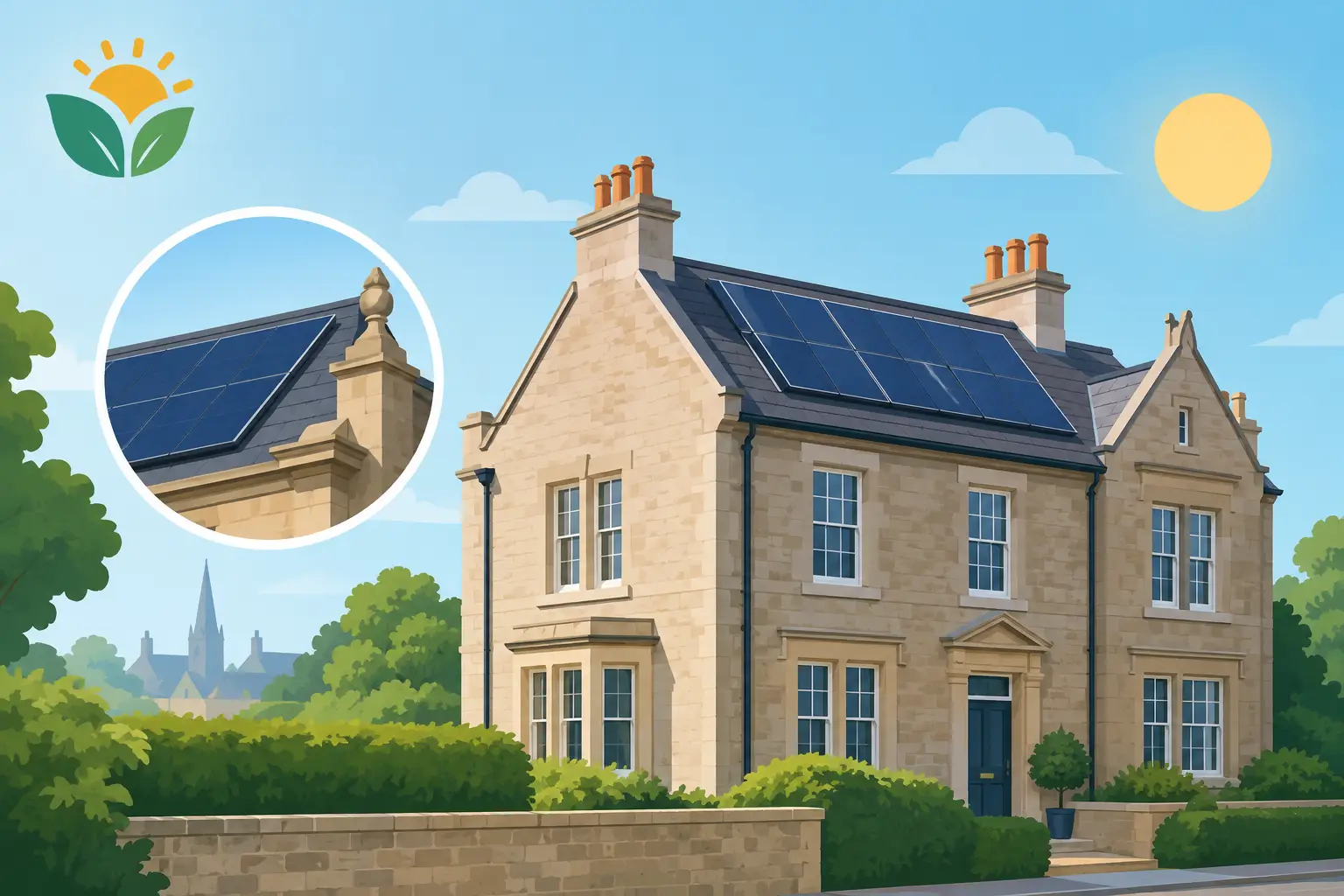
A south-facing roof has long been seen as the gold standard for solar panels, but it is not the only route to worthwhile savings. Understanding how roof orientation affects solar helps you judge what your property can realistically produce, when it will produce it, and how a well-designed system can support lower electricity bills.
For most UK homes and businesses, the best answer is not simply to fill the most southerly roof space with panels. Your daily electricity use, roof pitch, shading, available area and plans for battery storage all matter. A thoughtful design turns those details into a system that works hard for your property.
How roof orientation affects solar generation
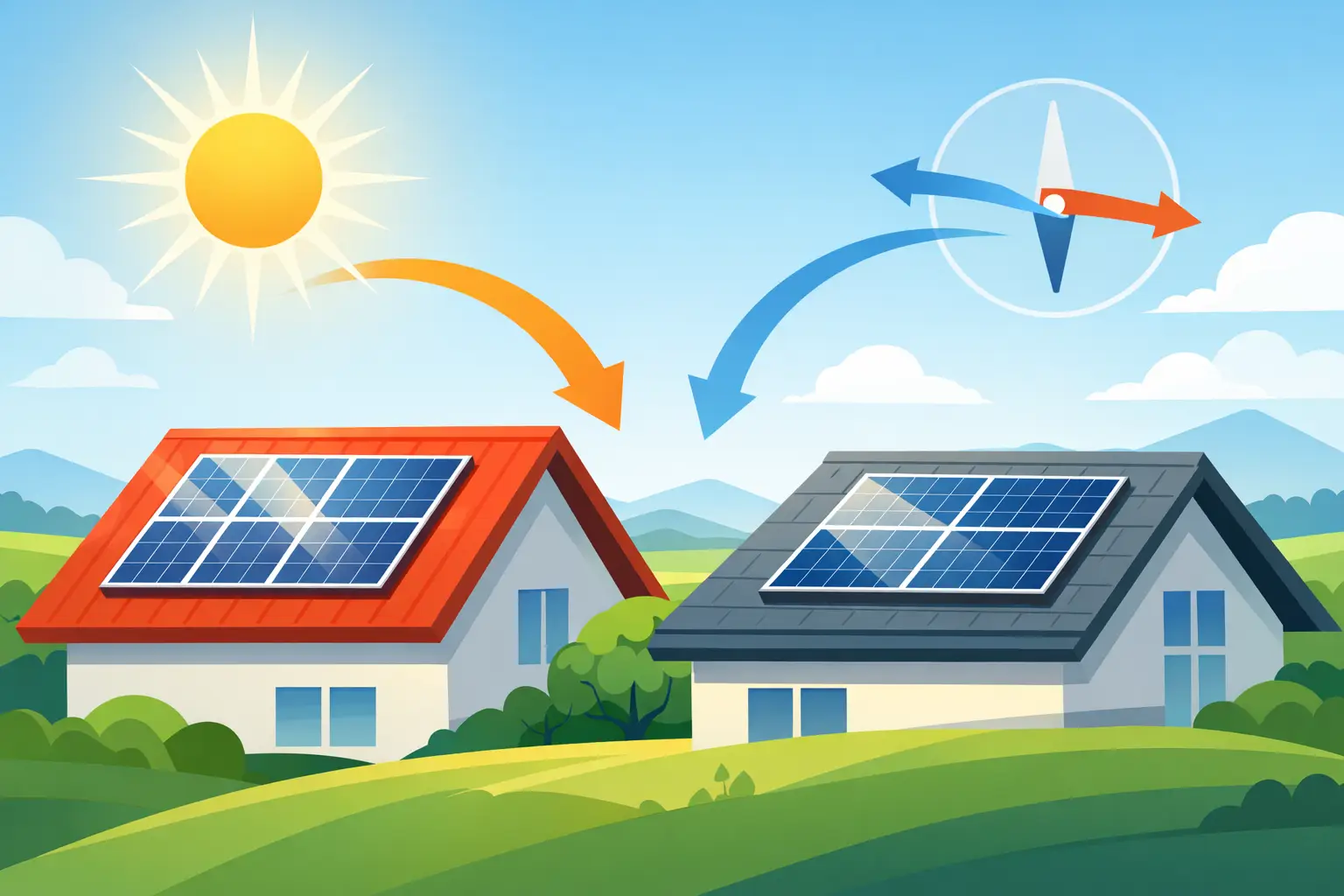
Roof orientation refers to the compass direction a roof faces. In the UK, panels facing south generally receive the greatest total annual sunlight because the sun spends most of the day in the southern half of the sky. This usually makes a south-facing array the strongest option where the goal is maximum yearly generation from a limited roof area.
That does not mean east- and west-facing roofs are poor candidates. They simply generate electricity at different times of day. An east-facing array begins producing earlier, while a west-facing array continues generating later into the afternoon and evening. For households that use power around breakfast time, after work and at teatime, this can be highly practical.
North-facing roofs normally produce less energy and are less commonly used as the primary location for a solar array. However, they are not automatically ruled out. A shallow roof pitch, a large unshaded area, high local electricity use or a combination with other roof elevations may still make panels worthwhile. This is why a proper site survey matters more than a quick rule of thumb.
South, east and west-facing panels compared
A south-facing system is often best for total annual output. If you are at home during the middle of the day, run appliances then, charge an electric vehicle, or have battery storage, that strong daytime generation can be particularly valuable.
East-facing panels produce more of their energy in the morning. They can suit homes where people are up early, use electric heating or hot water controls, and start appliances before leaving for work. West-facing panels shift more generation into the later part of the day, often matching the period when a household returns home and demand rises.
For many properties, an east-west split is the most sensible arrangement. It may produce slightly less energy over a full year than the equivalent south-facing system, but it can give a broader, flatter generation curve across the day. Rather than producing a sharp peak around midday, the system delivers useful power for longer. That can increase the amount of solar electricity you use yourself instead of exporting it to the grid.
This distinction matters because the value of solar is not just about the number of kilowatt-hours generated. It is also about how many of those kilowatt-hours reduce the electricity you would otherwise buy from your supplier.
The best orientation depends on when you use electricity
A family with an empty house during weekdays may benefit from a west-facing array and battery, as more generation arrives closer to the evening demand period. A home worker, meanwhile, may make excellent use of south-facing midday output. A business operating from early morning through late afternoon may find an east-west system a strong fit because it supports demand over more of its trading day.
There is no universal “best” orientation without looking at usage. Smart monitoring, export rates and battery options all influence the financial case. The aim is to design for useful generation, not chase a single headline figure.
Roof pitch changes the picture too
Orientation and pitch work together. In the UK, a roof pitch of roughly 30 to 40 degrees facing south is often close to ideal for annual generation. Yet roofs outside that range can still perform very well.
A flatter roof receives sunlight differently through the year than a steeper one. On a flat roof, mounting frames can usually angle panels towards the most suitable direction, although spacing between rows is needed to prevent one row shading another. This can reduce the number of panels that fit, so the design must balance panel angle, usable area and output.
Steeper roofs can remain excellent solar locations. A steep east- or west-facing roof, for example, may produce less at midday but can provide strong output at the start or end of the day. Roof pitch also affects how readily rain cleans the panels, the mounting method and installation access, all of which are considered during a professional survey.
Shading can matter more than orientation
A perfectly south-facing roof is not automatically the better solar roof if it is regularly shaded by a chimney, nearby trees, dormers or neighbouring buildings. Even partial shade can reduce output, particularly where it falls across panels at key times of day.
Modern system design can reduce the impact through panel layout, optimisers or microinverters where appropriate. These technologies allow panels to operate more independently than a traditional single-string arrangement. They are not necessary for every installation, and they add cost, but they can be valuable on roofs with complicated shapes or variable shading.
The right approach starts with an honest assessment. A good installer will account for obstructions, estimate their likely effect through the seasons and explain any design choices clearly. Promising maximum output without assessing shade is not a reliable basis for an investment decision.
Battery storage makes orientation more flexible
Battery storage changes the conversation around roof direction. Without a battery, solar electricity needs to be used as it is generated or exported. With a battery, surplus power can be stored for later use, helping you use more of your own generation after sunset.
This is particularly useful for south-facing systems that generate strongly around midday, when some households have low demand. Rather than exporting all of that surplus, a battery can hold energy for cooking, lighting and entertainment in the evening. It can also make an east-facing roof more valuable by carrying some morning surplus into later hours.
A battery does not make orientation irrelevant. It has a finite capacity, and winter generation is naturally lower than summer generation. But it gives a system more flexibility and can support greater energy independence when matched to the household’s needs and electricity tariff.
More panels are not always the answer
If your roof faces east or west, it can be tempting to add as many panels as possible to compensate for lower annual output. Sometimes that is sensible, particularly where electricity demand is high and roof space is available. But system size should reflect your expected consumption, export arrangements, roof structure and budget.
Oversizing can lead to a larger proportion of electricity being exported at a lower value than the power you buy. Conversely, a larger system can make strong sense for a household with an electric vehicle, heat pump, home battery or high daytime use. The numbers should be modelled around your property, not based on a generic package.
For commercial properties, roof orientation often needs to be considered alongside operating hours. A warehouse, office, farm building or retail site may have large daytime demand that makes solar attractive across several roof aspects. Flat commercial roofs can also offer design flexibility, provided structural capacity and wind loading are properly assessed.
What a tailored solar survey should establish
Before panels are specified, your installer should look at more than the compass direction of the roof. A useful survey considers the available roof elevations, pitch, shading risks, roof condition, electrical supply, likely annual usage and future plans such as an EV charger or battery.
It should also establish whether the roof can safely accommodate the proposed system and whether access, cable routes and equipment locations are practical. For UK homeowners, clear generation estimates and MCS-certified installation standards provide valuable confidence that the system has been properly planned.
At Infused Solar Energy, this planning stage is designed to make the decision clearer, not more complicated. The right system may be south-facing, east-west, or spread across more than one roof. What matters is that it is designed around the way you live and use energy.
A roof that is not perfectly south-facing should not put you off solar. Ask for a design that shows expected generation by orientation, explains the effect of shading, and considers how much energy you are likely to use at different times of day. That is how you move from a roof full of panels to a smarter home investment that helps you own more of your energy.