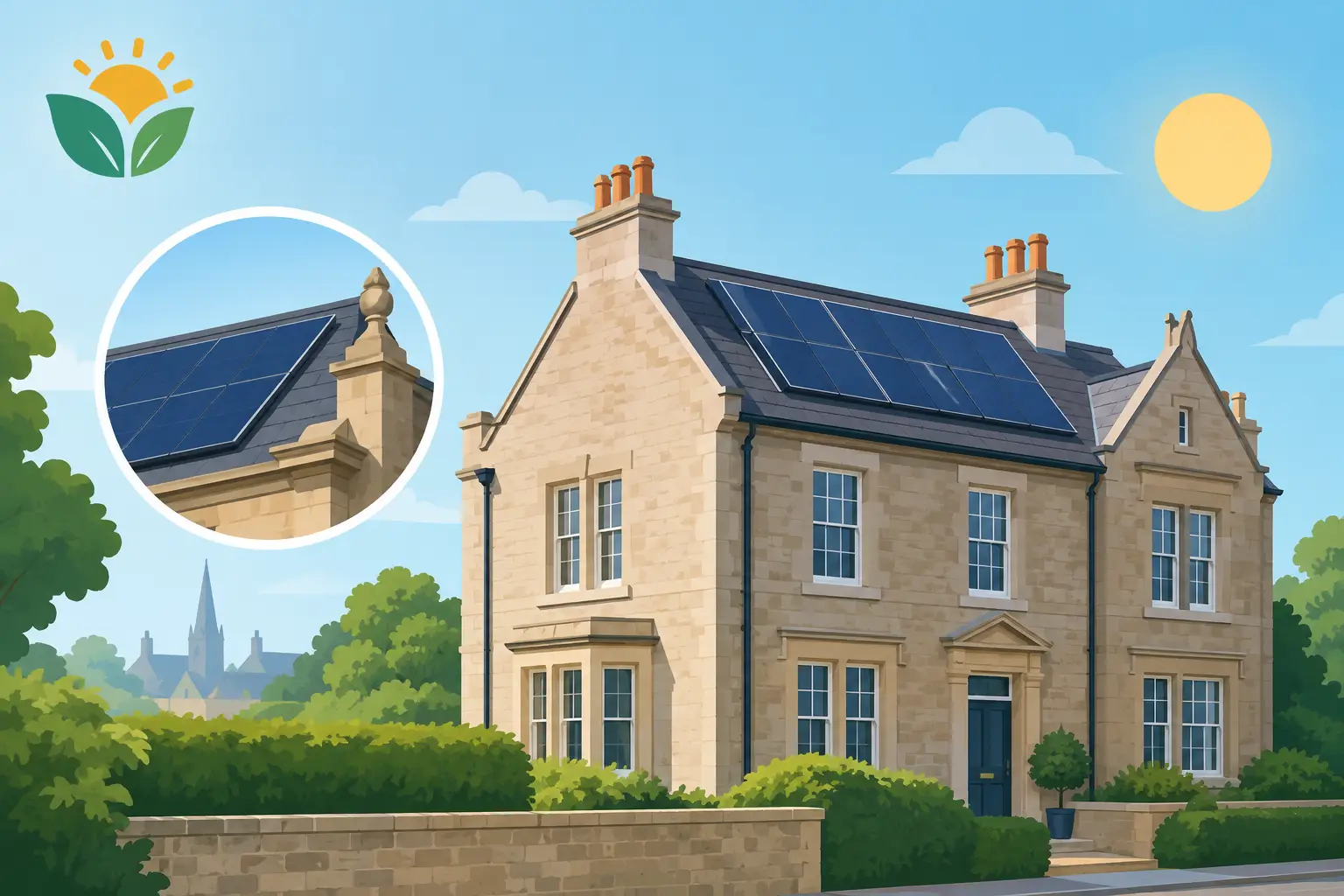
Your electricity bill already contains the starting point for a sensible solar design. It shows how much power your household needs across the year, which is far more useful than simply counting the number of panels on a neighbour’s roof. If you are asking, “how many panels for my home?”, the honest answer is that it depends on your usage, roof, future plans and how much of your electricity you want to generate yourself.
For many UK homes, a system of around 8 to 14 modern solar panels is a practical starting range. But the best number is not necessarily the largest system your roof can hold. A well-designed installation should help you use more of your own low-cost solar electricity, reduce what you buy from the grid and give you a clear route to greater energy independence.
Start with your annual electricity use
Your annual electricity consumption is the most reliable first measure. You can find it on your electricity statements or supplier account, usually shown in kilowatt-hours (kWh). A typical household might use between 2,700 and 4,500 kWh per year, although electric heating, an electric vehicle, a heat pump or a larger family can push this much higher.
As a broad guide, a modern 430W solar panel in the UK may generate roughly 350 to 430 kWh a year, depending on its orientation, shading and location. That means a home using 3,600 kWh annually could be suited to a system around 4 kW, often made up of 9 or 10 panels. A household using 5,000 kWh, particularly one planning to charge an electric vehicle, may benefit from 12 to 16 panels where roof space allows.
These figures are useful for planning, not a final quote. Solar generation changes month by month. Your panels will produce their highest output during longer, brighter spring and summer days, while your home may use more electricity in winter. The aim is to build a system around your real annual pattern, rather than expecting solar to cover every unit of electricity at every moment.
How many solar panels for my home in the UK?
The table below gives an indication of what system sizes can look like with 430W panels. Actual output will depend on the property and a detailed survey.
| Annual household use | Typical system size | Approximate number of 430W panels | | — | — | — | | 2,500-3,000 kWh | 3-3.5kW | 7-8 panels | | 3,000-4,000 kWh | 3.5-4.5kW | 8-11 panels | | 4,000-5,500 kWh | 5-6kW | 12-14 panels | | 5,500-7,000 kWh | 6-7kW | 14-17 panels |
This is not a rule that every household should follow. A compact, highly efficient home may use less electricity but have excellent south-facing roof space, making a larger array worthwhile. Equally, a property with high consumption may have a smaller or shaded roof, so battery storage, energy-use habits and panel placement become more significant.
Your roof can change the answer
Panel count is not decided by electricity use alone. A professional site survey assesses the parts of your roof that can generate well and safely support an installation.
South-facing roofs generally offer the strongest total annual generation, but east- and west-facing roofs can be extremely effective. An east-west layout produces power over a longer part of the day, which can suit households that use electricity in the morning and evening. It may improve the amount of solar power you consume directly, even if the annual total is slightly lower than a perfectly south-facing array.
Roof pitch, chimney stacks, dormers, skylights and shading also matter. Shade from nearby trees, buildings or roof features can reduce performance, particularly if it reaches panels during peak daylight hours. Modern system design can use optimisers or carefully planned panel strings where appropriate, but these should solve a genuine site-specific issue rather than be added as a default extra.
Space is another practical limit. Most modern residential panels are close to 1.7 to 2 square metres each. Ten panels may therefore need roughly 18 to 20 square metres of clear roof area, allowing for safe spacing and mounting requirements. A survey confirms what is possible without guesswork.
Panel wattage matters as much as panel quantity
Two homes can have the same number of panels but very different system sizes. Older systems may use 250W or 300W panels, while current residential panels are often rated around 400W to 450W or more. Ten 430W panels create a 4.3kW system. Ten 300W panels create a 3kW system.
That is why panel count on its own can be misleading. When comparing proposals, look at the total system capacity in kilowatts (kW), the estimated annual generation in kWh, and the assumptions behind those estimates. A clear proposal should explain these figures in plain English, alongside the equipment, warranties and expected financial benefit.
Choosing higher-wattage panels can help where roof space is limited. However, the highest-rated panel is not always automatically the best value. Product quality, warranty terms, roof layout and the rest of the system design should all be considered together.
Think about how you use electricity, not just how much
A solar system works hardest for your finances when you use its electricity as it is generated. Running appliances during the day, scheduling a dishwasher or washing machine, and charging an electric vehicle at suitable times can increase your solar self-consumption.
This is where a home battery can make a meaningful difference. Instead of exporting unused daytime generation, you can store some of it for the evening when households often need it most. Batteries can also be useful for homes on time-of-use tariffs, allowing you to charge at lower overnight rates and use stored energy at more expensive times.
A battery does not necessarily mean you need fewer panels. In many cases, the best result comes from pairing a well-sized solar array with a battery that matches your likely surplus and evening demand. An oversized battery may take longer to justify if it rarely charges fully, while an undersized one may not hold enough energy to cover the evening peak. The right balance is personal to the property.
Plan for the home you are moving towards
When deciding how many panels to install, consider changes you expect over the next few years. An electric vehicle, heat pump, induction hob, home office or growing family can all increase your electricity demand. Adding more panels later can be possible, but it may involve extra installation work, matching equipment and revised system design.
If you know your usage is likely to rise, it can make sense to allow for it from the outset, provided the investment remains appropriate for your budget and roof. It is also worth considering inverter capacity and battery compatibility at the design stage. This keeps future upgrades more straightforward and protects the value of your installation.
There is a trade-off. Designing for a future that may never arrive can mean paying for capacity you do not yet use. The most sensible approach is an open conversation about confirmed plans, likely changes and what can be added later.
Why a tailored survey is worth it
Online solar calculators can offer a quick estimate, but they cannot inspect shading, measure usable roof areas or understand how your household uses energy. They also cannot confirm whether your electrical setup, roof condition or local grid connection needs any particular consideration.
A proper survey turns a rough panel estimate into a system designed for your property. An MCS-certified installer should assess your roof, review consumption, model generation and explain the proposed layout before installation. You should know what the system is expected to produce, what you are likely to use yourself, and how battery storage could change the outcome.
At Infused Solar Energy, that end-to-end approach is designed to remove the uncertainty. From survey and bespoke design through to installation, monitoring and aftercare, the focus is on a system that feels clear, practical and built around your home.
The right number of panels is the number that fits your roof, your energy habits and your plans with confidence. Start with your annual kWh use, be realistic about future demand, and ask for a design that shows exactly how your system will work for you. That is how solar becomes more than a roof upgrade – it becomes a smarter way to own your energy.