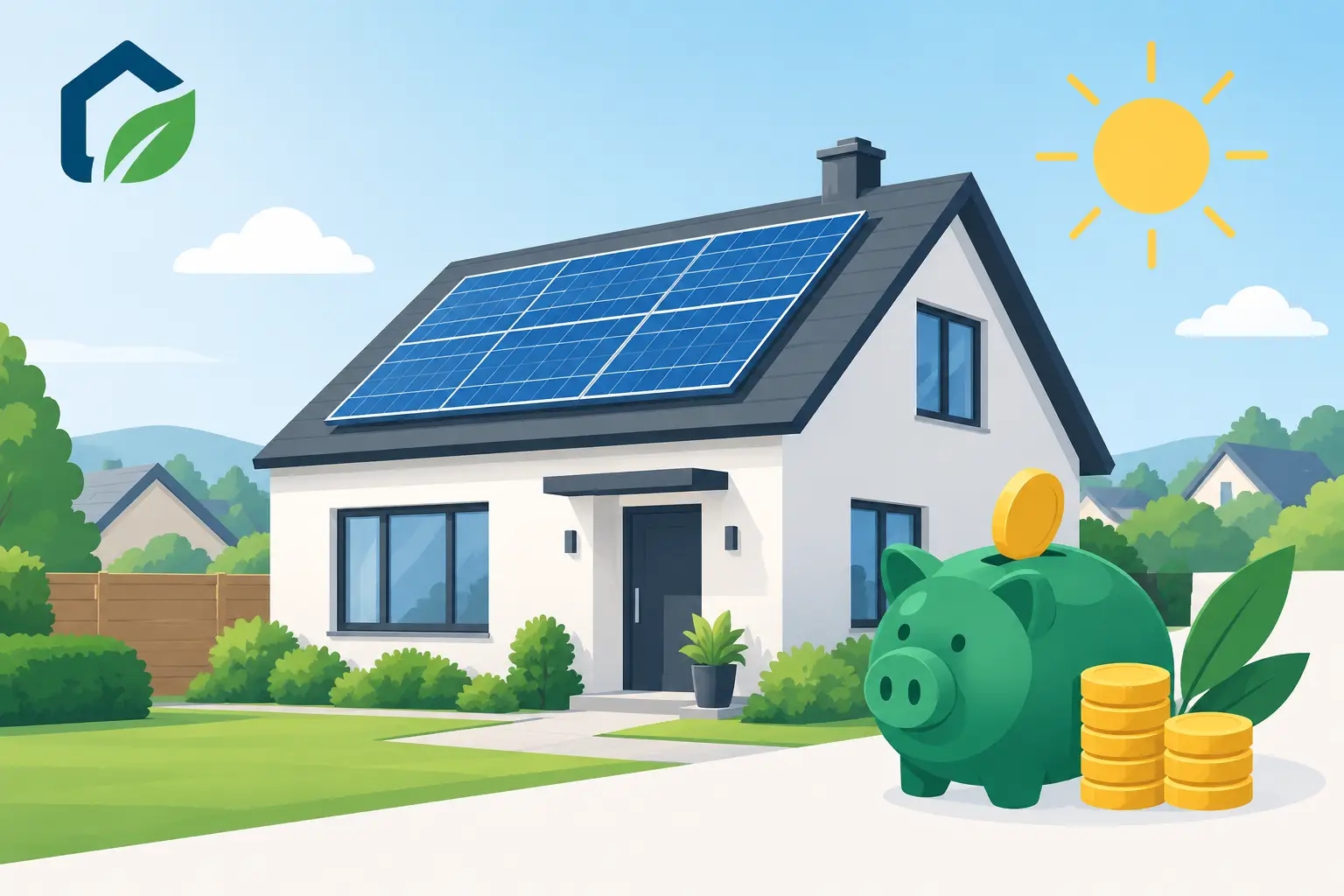
A home solar savings example is far more useful than a headline promise. It shows where the money actually comes from: the electricity you no longer buy from the grid, the value of surplus power exported, and the difference a battery can make to how much of your solar energy you use yourself.
For a typical UK household, solar can be one of the smartest home investments you can make. But the right savings estimate should reflect your roof, your electricity habits and your tariff, rather than relying on a single national figure.
A realistic home solar savings example
Imagine a household using 3,800 kWh of electricity a year. That is slightly above the UK average and could suit a family home with people working from home, regular cooking and washing, and evening electricity use.
They install a 4.2 kWp solar panel system with a home battery. On a reasonably well-positioned, lightly shaded roof in southern England, that system may generate around 3,900 kWh of electricity annually. Actual generation can be higher or lower depending on the roof direction, pitch, shade, panel specification and local weather.
For this example, let us use an electricity import price of 27p per kWh and an export tariff of 15p per kWh. Standing charges are not included because solar does not normally remove them.
With a correctly sized battery, the household uses around 2,650 kWh of its solar generation in the home. It exports 1,100 kWh to the grid, while approximately 150 kWh is lost through battery charging and conversion. The figures work out as follows:
- Electricity not bought from the grid: 2,650 kWh x 27p = £715.50
- Payments for electricity exported: 1,100 kWh x 15p = £165.00
- Estimated annual benefit: about £880
Before solar, buying all 3,800 kWh from the grid at 27p would cost roughly £1,026 a year, excluding the standing charge. After installation, the household still imports electricity at night and during periods of low generation, but its imported energy falls to around 1,150 kWh. That leaves an import cost of about £310, plus £165 earned from export payments.
This is a useful illustration, not a guaranteed return. Energy prices can change, export tariffs vary between suppliers, and every household uses electricity differently. The value is in seeing the calculation clearly, rather than being offered a savings figure without the workings behind it.
Why using more of your own solar power matters
Every unit of solar electricity used in your home is usually worth more than a unit sent to the grid. In this example, using a kWh at home avoids paying 27p to import it. Exporting that same kWh earns 15p.
That difference is why daytime usage and battery storage matter. A household that can run appliances while the panels are generating may use more of its power directly. Timed washing machines, dishwashers and EV charging can all help, provided they fit naturally around everyday life.
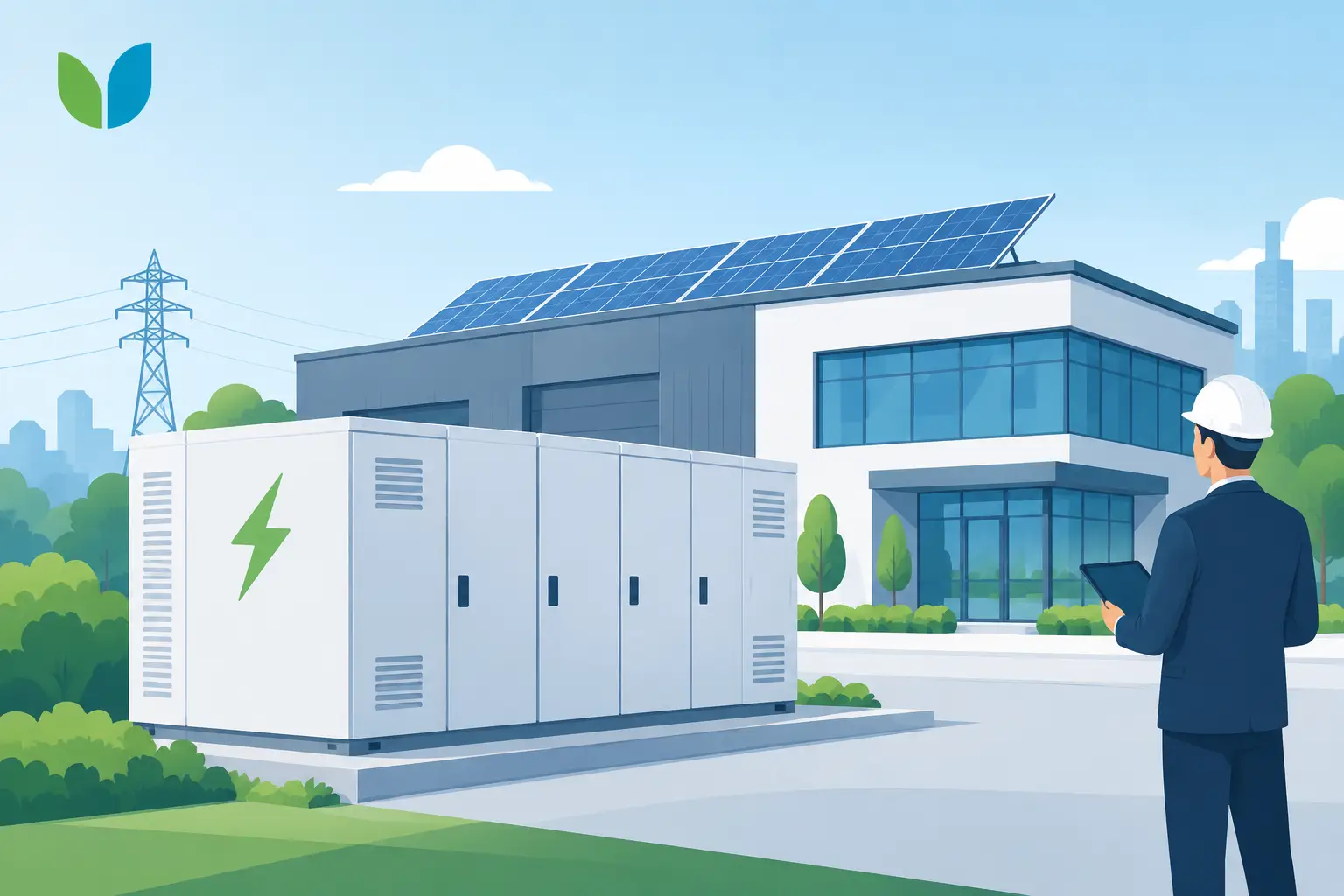
A battery stores surplus electricity produced during the day for use later, often in the evening when many homes have their highest demand. It can increase self-consumption, reduce reliance on grid electricity after sunset and provide more control over how your energy is used.
However, a battery is not automatically the right answer for every home. It adds to the upfront cost, loses a small amount of energy during charging and discharging, and should be sized around real usage rather than simply made as large as possible. For a household that is empty most weekdays or has a modest electricity bill, solar panels alone may offer the more attractive first step.
How the figures change without a battery
Using the same 4.2 kWp system, a household without battery storage might use around 1,650 kWh of its solar electricity directly and export 2,250 kWh. At the same example tariffs, that produces approximately £445 of avoided grid purchases and £337.50 in export payments – around £782.50 a year in total value.
The difference is roughly £100 in this scenario. That does not mean a battery has only £100 of value, or that it will always deliver the same result. Its financial case changes with electricity prices, export rates, household demand after sunset and whether it can charge at cheaper off-peak tariff periods.
For some homeowners, the appeal is also practical. Battery storage can make solar feel more useful throughout the day, especially when the family returns home in the evening. Others prefer to keep their initial investment lower and add a battery later. A well-designed solar system should leave that option open where possible.
What affects your solar savings most?
Your roof is the starting point. South-facing roofs often produce the highest annual generation, but east-west roofs can still work very well because they generate across more of the morning and afternoon. Shade from chimneys, trees and neighbouring buildings can have a meaningful effect, which is why a site survey and considered panel layout are essential.
Your daily pattern matters just as much. Someone at home during the day can use solar power as it is produced. A household that uses most electricity between 5pm and 10pm may see stronger results with battery storage. High electricity users, including households with an EV, electric heating or a hot tub, may have more opportunity to use their generation on site, although an EV is not always at home during solar hours.
Tariffs also have a direct impact. Higher import prices increase the value of every unit you avoid buying. A strong export tariff improves the value of surplus generation. Smart tariffs can create further opportunities, but they need to be reviewed carefully. The best tariff for a home that exports heavily may not be the best tariff for a home with a battery charging overnight at low rates.
Finally, system size should be based on more than annual consumption. Installing far more generation than you can use or export profitably may stretch the payback period. Installing too little may limit the benefit of an otherwise suitable roof. The aim is a system designed around the property and the people living in it.
Looking at payback without oversimplifying it
If a solar and battery installation costs, for example, £9,000 and delivers around £880 of value in its first year, a simple calculation suggests a payback period of just over 10 years. That is only a starting point.
Solar panels are long-life assets, and the value of the electricity they produce continues after the initial investment has been recovered. Savings may rise if grid electricity costs increase, but they can also change if export rates fall or household routines shift. Battery capacity gradually reduces over time, while panel output declines slowly rather than stopping at a fixed date.
A proper proposal should show estimated generation, expected self-consumption, tariff assumptions and projected returns in plain language. It should also make clear what has and has not been included. Trustworthy figures leave room for real-world variation rather than presenting the best possible outcome as a certainty.
How to get an estimate that fits your home
Bring a recent electricity bill or annual usage figure to your survey. If you know when you use most electricity, mention that too. Plans for an EV, heat pump, extension or growing family are relevant because they can change the system that makes sense today.
A professional design should consider your roof, shading, consumption and future plans before recommending panel numbers or battery size. At Infused Solar Energy, that practical, end-to-end approach helps homeowners make a clear decision with MCS-certified installation and ongoing support behind it.
The best next step is not to chase the biggest savings claim. It is to ask for a transparent estimate built around your own roof and routine, so you can own more of your energy with confidence.