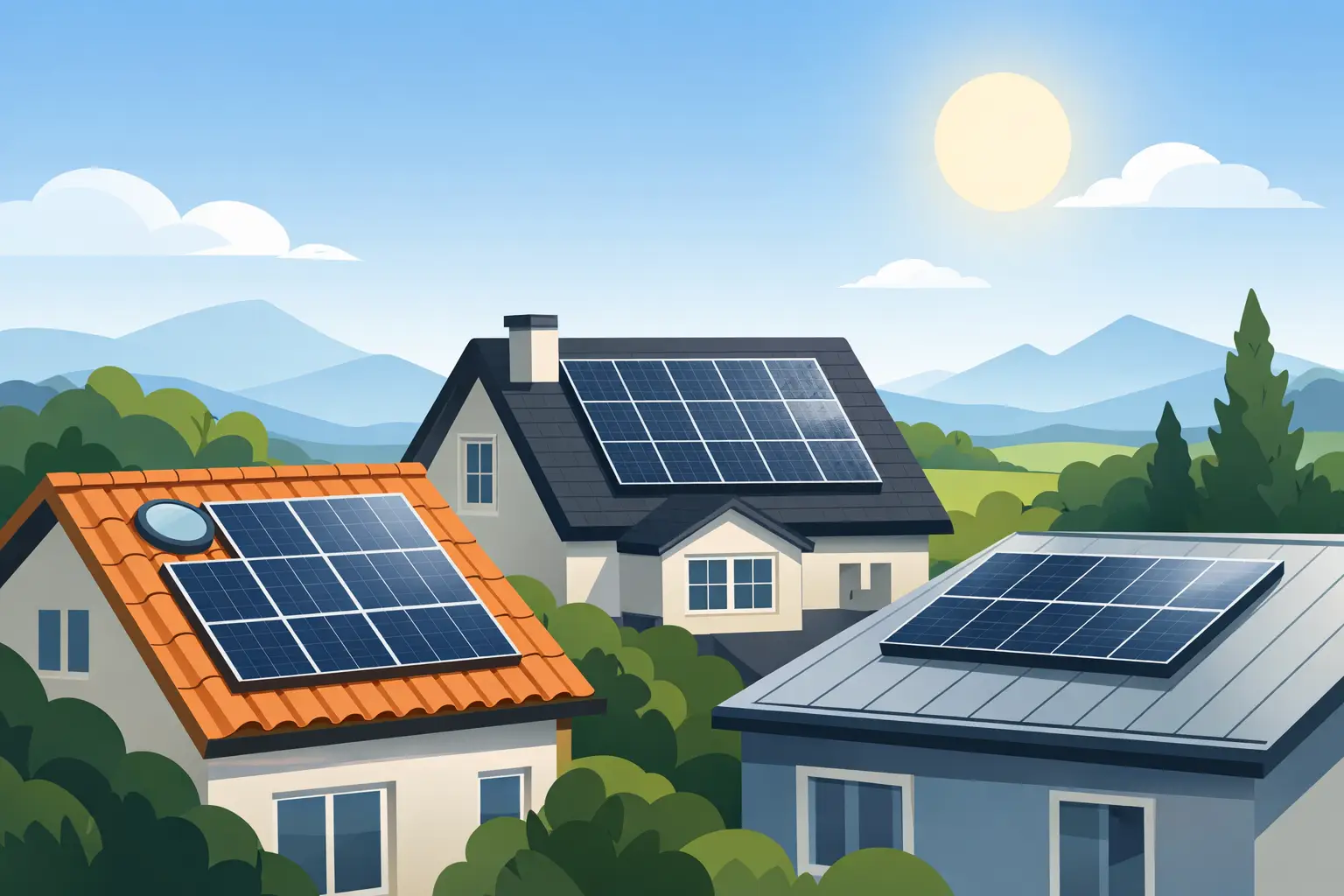
A south-facing, unshaded roof can look ideal from the pavement, but the best roofs for solar panels are not defined by direction alone. Roof covering, age, structure, available space and future maintenance all affect whether a system will be safe, productive and worthwhile. A proper survey turns those details into a design that suits your property rather than forcing a standard system onto it.
For most UK homes, solar is possible on far more roof types than people expect. The question is usually not simply whether panels can be fitted. It is whether they can be fitted securely, with sensible generation potential and without creating avoidable work further down the line.
Which are the best roofs for solar panels?
A sound pitched roof with modern concrete or clay tiles is often the simplest and most cost-effective option. These roofs give installers a straightforward way to fix mounting rails into the roof structure, then place the panels slightly above the tiles for ventilation and weather protection.
That does not mean every tiled roof is identical. Tile condition matters, as does the underlying timber. A newer roof in good repair is generally an excellent starting point, while a roof close to the end of its life may be better re-covered before solar is installed. Taking that decision early can prevent the cost and disruption of removing and reinstating panels when roofing work is needed later.
Well-maintained slate roofs can also be very suitable, particularly on older properties. Slate needs more careful handling because it can be brittle, and replacement slates must match the existing roof where possible. An experienced installer will assess the roof closely and use an appropriate mounting method rather than treating slate like standard concrete tile.
Flat roofs are another strong option, especially for commercial buildings, extensions and modern homes. Panels are normally installed on angled frames, allowing the array to face the most useful direction. A flat roof can offer considerable design flexibility, but it needs enough clear space to avoid one row shading another and enough structural capacity to accommodate the mounting system.
Roof type matters, but condition comes first
Solar panels are designed to last for decades. Your roof should be ready to do the same. Before installation, a competent survey should consider the roof covering, visible signs of leaks or movement, access, loft structure and the condition of fascias, gutters and flashing.
If tiles are cracked, mortar is failing or the roof has already been patched repeatedly, solar should not be used to postpone essential repairs. Re-roofing first can be the more economical choice over the lifetime of the system. It gives your installer a clean, reliable surface to work with and gives you confidence that the roof and solar array are working together for the long term.
The supporting structure is equally important. Panels, rails and fixings add weight, while wind loading creates additional forces that must be accounted for. This is not something to estimate from photographs alone. A professional design considers the property, roof pitch, local exposure and fixing arrangement so that the system is engineered appropriately.
The strongest roof coverings for solar installation
Most common UK roofing materials can support solar when they are in good condition. The practical differences tend to be about installation approach, cost and care rather than whether solar is possible at all.
Concrete and clay tiles
Concrete and clay tiles are among the most common and solar-friendly roof coverings in the UK. Individual tiles can be lifted during installation so brackets can be fixed to roof rafters, with flashing used to maintain a weather-tight finish. Panels then sit on aluminium rails above the roofline.
This approach is well proven and works neatly on many detached and semi-detached homes. The key consideration is the state of the tiles. Older concrete tiles may be more prone to cracking, so an installer should allow for suitable replacements where needed rather than refitting damaged tiles.
Natural and fibre cement slate
Slate can deliver an elegant finish and a long service life, but it requires an installer who understands how to work with it. Natural slate may crack if handled carelessly, and older roofs can have irregular battens or hidden maintenance issues. A careful survey, correct fixings and an allowance for replacement slates are sensible safeguards.
Fibre cement slate is generally more uniform but can still be fragile, particularly on older roofs. It should never be treated as a quick-fit job. The quality of the roof work beneath the panels matters just as much as the electrical installation.
Flat felt, membrane and single-ply roofs
A flat roof is often one of the best roofs for solar panels where space is available and the waterproofing system is sound. Panels can be mounted at an angle to improve generation, usually with a weighted or mechanically fixed frame designed for the building.
There are trade-offs. Angled panels need spacing between rows to reduce self-shading, so a large flat roof does not always mean every square metre can be covered. The roof’s load capacity, drainage routes and membrane warranty must also be considered. On commercial premises, these details are central to a safe, durable design.
Metal roofs
Standing-seam metal roofs can be particularly efficient to work with because clamps may attach to the seams without penetrating the roof covering. Corrugated and box-profile metal roofs can also support solar, although their profile, thickness and structural arrangement need checking before a mounting method is selected.
Metal roofs are common on agricultural and commercial buildings, where large uninterrupted roof areas can make solar especially attractive. Roof corrosion, insulation build-up and access arrangements should be reviewed before work begins.
Direction, pitch and shade: the performance factors
A south-facing roof remains a strong choice in the UK because it can generate most around the middle of the day. East- and west-facing roofs can also work very well, often spreading generation more evenly from morning to afternoon. That can suit households that use power at breakfast and again after work, or businesses operating across standard daytime hours.
Roof pitch influences performance, but there is no single perfect angle for every property. Many UK roofs sit within a useful range for solar. A slightly less-than-perfect orientation is often not a reason to dismiss the opportunity, particularly when electricity use, export payments and battery storage are considered as part of the wider system.
Shade deserves close attention. Chimneys, dormers, nearby trees, adjoining buildings and even roof vents can reduce output, especially if they shade a panel for part of the day. Modern system design can reduce the impact through thoughtful panel placement and suitable electrical equipment, but it cannot make heavy, permanent shade disappear. Honest projections should reflect the real site, not an idealised roof.
Roof features that need extra planning
Dormer windows, skylights, valleys and multiple roof levels do not automatically rule out solar, but they reduce the clear area available for panels. They may also create shade or make access more complex. A bespoke layout often produces a better result than trying to fill every visible gap.
That is particularly relevant for homes with small roof sections. Sometimes fewer, higher-output panels placed on the clearest area will be a better investment than a larger array split across awkward roof faces. The right system is the one that balances generation, aesthetics, safety and your electricity usage.
Asbestos-containing roof sheets require specialist assessment and should not be drilled, walked on or disturbed as part of a routine installation. If there is any doubt about the material, it must be identified before design or installation proceeds. Replacing the roof may be necessary before solar can be considered safely.
Listed buildings and homes in conservation areas may have additional planning considerations, particularly where panels are visible from public spaces. Requirements vary by location and property, so this should be checked at the outset rather than after a system has been designed.
Why a site survey makes the difference
An online estimate can provide a helpful starting point, but it cannot confirm whether a roof is suitable. A detailed site survey verifies measurements, roof condition, access, shading, cable routes and your consumer unit. It also allows the system size to be matched to how you use energy, rather than simply to the maximum number of panels that will fit.
For many homes, adding a battery is worth considering at the same stage. Solar panels generate during daylight hours, while household demand often peaks in the morning and evening. Battery storage can retain surplus generation for later use, helping you use more of the electricity your system produces. It is not essential for every installation, but it can make a well-sited roof work harder for your household.
At Infused Solar Energy, this planning-led approach helps ensure each installation is designed around the building and the customer’s goals. MCS-certified engineers, clear proposals and ongoing support give property owners a practical route to owning more of their energy.
A good roof for solar is not always the newest, largest or most perfectly south-facing one. It is the roof that is structurally sound, sensibly laid out and assessed honestly before work begins. Start with the condition of your roof, then let a professional survey show what your property can realistically achieve.