If you have ever looked at your electricity bill after a bright day and wondered why so much of your solar power still went back to the grid, this is where battery storage starts to make sense. A lot of property owners ask, how do battery storage systems work, and the short answer is simple: they store unused electricity so you can use it later, when your home or business actually needs it.
That simple idea can make a real difference. Solar panels often generate the most electricity in the middle of the day, but many households use more power in the morning and evening. Without a battery, surplus energy is usually exported. With one, you keep more of what you generate and use more of your own power on site.
How do battery storage systems work in practice?
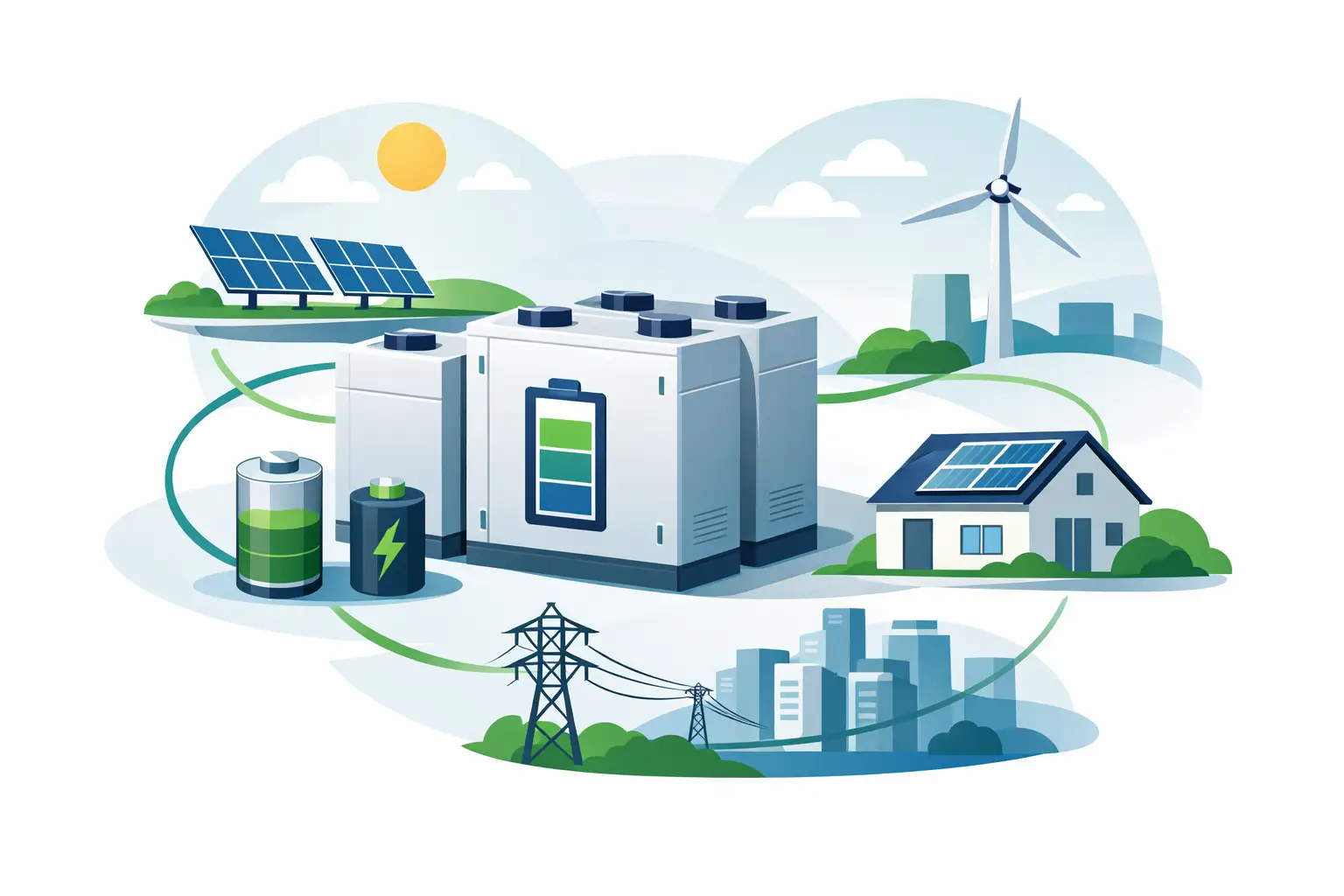
A battery storage system sits alongside your solar installation and manages electricity flow between your panels, your property, the battery and the grid. When your panels produce more electricity than your building is using, that extra energy charges the battery. When solar production drops, such as after sunset or during dull weather, the battery discharges stored power back into the property.
The aim is not just storage for the sake of it. The aim is better timing. Electricity becomes more valuable when you can use it at the right moment instead of exporting it for less and buying it back later at a higher rate.
Most modern systems do this automatically. You do not need to switch anything manually. The system monitors generation and demand in real time, then decides whether to power the property directly, charge the battery or import from the grid.
The main parts of a battery storage system
To understand how battery storage systems work, it helps to break the system into its main components.
The battery itself stores electricity, usually in lithium-ion cells. These are popular because they are compact, efficient and well suited to repeated daily charging and discharging. Capacity is measured in kilowatt-hours, which tells you how much energy the battery can store.
The inverter is equally important. Solar panels generate direct current electricity, but homes and most commercial buildings use alternating current. The inverter converts electricity into the form your property can use. In some systems, the battery has its own inverter. In others, storage and solar share a hybrid inverter.
There is also a battery management system. This acts as the control centre, monitoring battery temperature, charge level and performance. It helps protect the battery from overcharging, deep discharging and overheating, all of which can shorten lifespan.
Finally, there is the monitoring platform. This gives you visibility over generation, storage, import and export. For most customers, this is where the system becomes real. You can see when your solar is charging the battery, when the battery is powering the property and how much grid electricity you are avoiding.
What happens during a typical day?
On a sunny morning, your solar panels begin producing electricity. Your property will use that power first. If generation rises above what you need at that moment, the excess flows into the battery.
By midday, if your battery still has space, it continues charging. Once it is full, any further surplus will usually be exported to the grid. Then, later in the day, when panel output falls and your demand rises, the battery starts discharging to cover your usage.
In the evening, this can be especially useful. Lighting, cooking, appliances, office equipment and heating controls often increase demand just as solar generation drops away. Instead of buying all of that electricity from the grid, you can rely on energy stored earlier in the day.
On darker winter days, the pattern is the same, but there may simply be less excess solar available to charge the battery fully. That is why expected savings vary by season, system size and usage habits. Battery storage is highly effective, but it is not magic. Performance depends on how much energy you generate and when you use it.
Why battery storage matters for savings
For many UK households and businesses, the value of battery storage comes down to self-consumption. This means using more of your own solar electricity instead of exporting it.
Without storage, a property may only use a portion of the solar power it generates in real time. With storage, that percentage often increases significantly. The more self-generated electricity you use on site, the less you buy from the grid, and that is where the financial benefit is usually strongest.
There can also be tariff advantages. Some battery systems can be set up to charge from the grid during cheaper off-peak periods and discharge when electricity costs are higher. Whether that makes sense depends on your tariff, your consumption pattern and the battery setup. For some customers, it adds extra value. For others, solar charging remains the priority.
How long can a battery power a property?
This depends on two things: the battery size and how much electricity you are using at the time.
A modest battery may cover evening essentials for several hours. A larger system could support more of the property for longer. But battery storage is not usually designed to run an entire building at full demand for extended periods. Kettles, electric showers, ovens, heat pumps and commercial machinery can all draw significant power.
That is why system design matters. The right battery is not simply the biggest one available. It should be matched to your generation profile, daily demand and budget. Oversizing can increase costs without delivering proportional savings, while undersizing may limit the benefit.
Are all battery storage systems the same?
Not quite. Although the principle is similar, there are important differences.
Some batteries are AC-coupled, which means they are added to an existing solar system relatively easily. Others are DC-coupled and often form part of a new installation using a hybrid inverter. One route may be better than the other depending on whether you already have solar and how your current system is configured.
There are also differences in usable capacity, power output, efficiency, warranty length and backup capability. Not every battery provides power during a grid cut. Some are designed purely for savings and self-consumption, while others can supply selected circuits during an outage if they are installed with backup functionality.
This is where clear advice matters. A battery that looks cheaper upfront may offer less usable storage, lower efficiency or fewer cycles over its lifetime. The best option is usually the one that fits your property properly, not just the one with the lowest headline price.
Safety, lifespan and maintenance
Modern home and commercial battery systems are designed with multiple safety controls. Quality products include protections against overheating, overcurrent and abnormal charging behaviour. Professional installation is just as important as product quality, because correct positioning, wiring and commissioning all affect long-term safety and performance.
In terms of lifespan, most lithium-ion batteries are built to last for many years and often come with substantial warranties. Over time, battery capacity gradually reduces, which is normal. The battery still works, but it may hold slightly less energy than when it was new.
Maintenance requirements are generally low, especially compared with more mechanical systems. In most cases, regular monitoring and occasional checks are enough. What matters more is that the system has been specified and installed correctly from the start.
Is battery storage worth it without solar?
It can be, but the case is usually stronger with solar. Without panels, a battery can still help you shift electricity use to cheaper tariff periods. That may reduce bills if you are on a suitable time-of-use tariff.
However, when paired with solar, the battery does more. It stores your own renewable generation, reduces grid reliance and improves the value of the electricity your panels produce. For customers looking to own their energy and gain more control over rising costs, that combination is often the most compelling.
How do battery storage systems work for businesses?
The principle is the same, but the numbers are bigger and the usage patterns can be very different. Offices, retail sites, farms and industrial premises often have daytime demand that already aligns well with solar generation. In those cases, batteries may be used to capture overflow, reduce peak import or support operations later in the day.
For some commercial sites, the benefit is not just lower energy costs. It is also better control, more predictable usage and a stronger overall energy strategy. Again, it depends on the site. A detailed assessment of load profile, opening hours and existing infrastructure will usually show whether storage is likely to add strong value.
At Infused Solar Energy, this is why battery storage is treated as part of the wider system design rather than an afterthought. The best results come from looking at the full picture.
Choosing battery storage is not really about buying a box on the wall. It is about deciding how much of your own electricity you want to keep, how much control you want over your bills and how future-ready you want your property to be. The right system should make energy simpler, not more complicated.