A lot of homeowners start in the same place – one high electricity bill, one look at the roof, and one obvious question: what are the best solar panels for homes like mine?
The honest answer is that there is no single panel that is best for every property. The right choice depends on your roof size, how much electricity you use, whether you want a battery, and how long you plan to stay in the home. The best system is the one designed properly, installed well, and matched to how your household actually uses energy.
What makes the best solar panels for homes?
When people compare solar panels, they often focus on wattage alone. That matters, but it is only one part of the picture. A panel with a higher power rating can be a strong option, but the real test is how well it suits your roof and your goals.
For most UK homes, the key things to look at are efficiency, product warranty, performance warranty, appearance, and value over time. Efficiency matters most when roof space is limited. If you have a smaller roof, a higher-efficiency panel can help you generate more power from the available space. If you have a large, unshaded roof, slightly lower-efficiency panels may still deliver excellent results at a better overall cost.
Warranty is another area where shortcuts can cost more later. A strong product warranty offers reassurance that the panel itself is built to last. A good performance warranty gives you confidence that output will not drop too sharply over the years. Solar is a long-term investment, so the panel should be judged over decades, not just by its headline price.
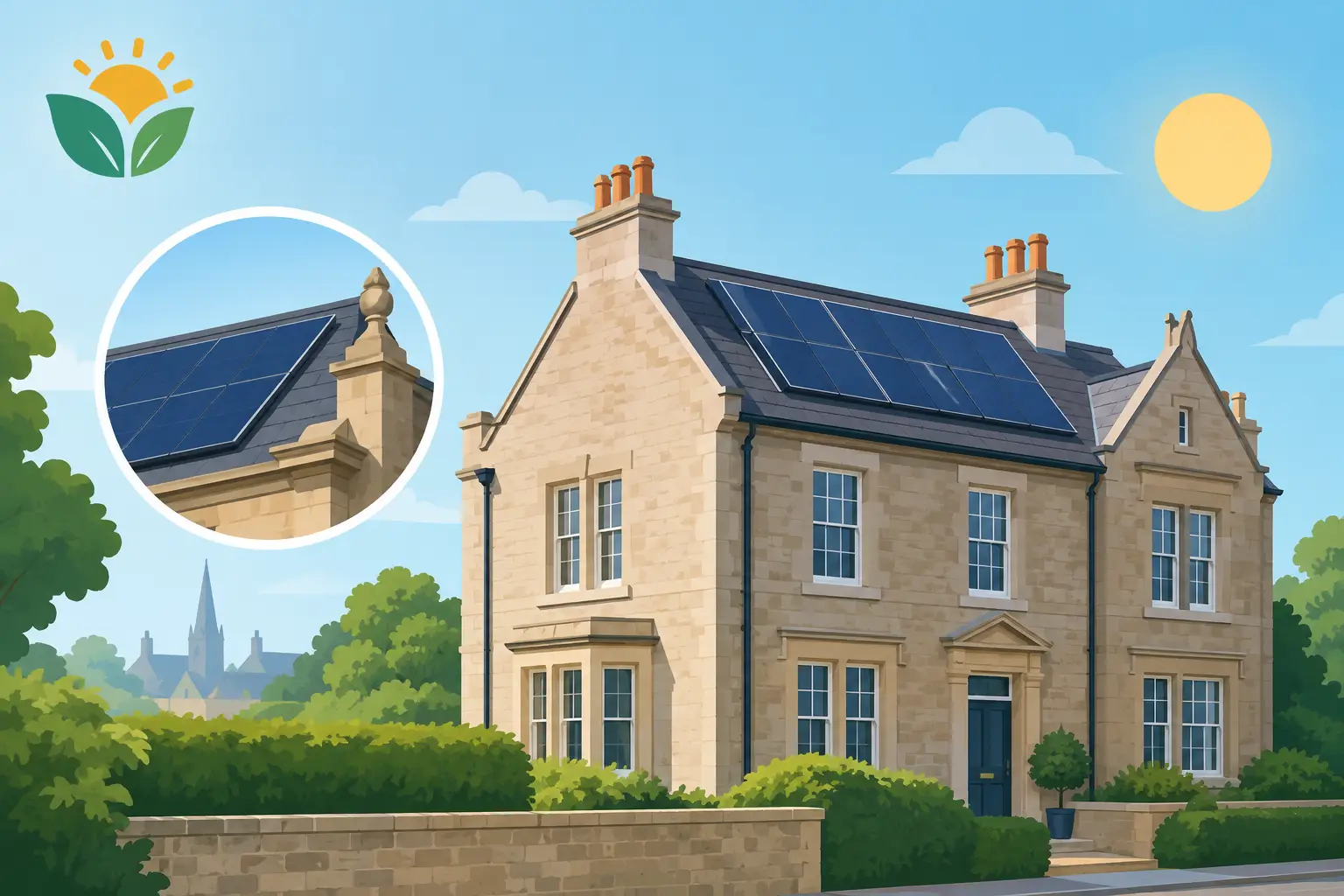
Appearance also matters more than some people expect. Many homeowners prefer all-black panels because they look neater on modern roofs and blend in better from the street. They may cost a little more, but for many households the finish is worth it.
Types of solar panels for homes
Most residential systems in the UK use monocrystalline panels, and for good reason. They are efficient, reliable, and well suited to typical domestic roof sizes. If you are searching for the best solar panels for homes, this is usually where the conversation starts.
Monocrystalline panels tend to perform well in lower light conditions, which is helpful in the UK where bright summer days are only part of the story. They also have a clean, uniform appearance that many homeowners prefer.
Polycrystalline panels were more common in the past because they were often cheaper, but they are now less widely used for residential installations. In many cases, the price gap is not large enough to outweigh the lower efficiency.
There are also premium panel options with advanced cell designs, such as half-cut cells or N-type technology. These can improve performance, especially where shading, heat, or limited roof space are concerns. They are not always necessary, but they can be worthwhile if your roof needs every panel to work harder.
The best solar panel brands for UK homes
Brand matters, but perhaps not in the way people think. A well-known manufacturer with a solid track record is generally a safer choice than a bargain brand with little support behind it. Good brands usually offer stronger warranties, better long-term reliability, and more consistent quality control.
That said, the badge on the back of the panel is not the whole system. A premium panel installed poorly will not outperform a good-quality panel installed correctly. This is why installer quality matters just as much as panel choice. The design, inverter setup, cable routing, monitoring, and overall workmanship all affect performance.
For most homeowners, it makes sense to look for panels from established manufacturers with proven UK availability and clear warranty support. There is little value in choosing a panel that looks impressive on paper if replacement parts or support become difficult later.
Efficiency vs value: which matters more?
This is where practical decision-making becomes more important than chasing the most expensive option.
If your roof space is tight, higher-efficiency panels are often worth the extra cost because they help maximise generation. On a smaller semi-detached roof, for example, every panel position counts. In that case, paying more for stronger output can make financial sense.
If you have a larger detached property with plenty of south-facing roof space, you may not need the most efficient panels on the market. A slightly more cost-effective panel may still produce the energy you want, with a better return on investment overall.
It depends on what you are trying to achieve. Some households want to offset as much electricity usage as possible. Others want the shortest payback period. Others care most about battery charging, future-proofing for an electric vehicle, or making the home more energy independent. The best panel is the one that supports that goal.
Roof suitability matters more than panel marketing
A good installer will spend more time looking at your roof than at glossy product claims. That is a good sign.
Roof orientation, pitch, shading, and usable space all influence solar performance. South-facing roofs usually deliver the strongest output, but east and west-facing roofs can still work very well, especially when matched to how your home uses electricity through the day. Even a north-facing roof may be viable in some cases, though returns are usually lower.
Chimneys, dormers, vents, and nearby trees can all reduce the amount of usable space or affect generation. That does not mean solar is off the table. It simply means the system should be designed around real site conditions rather than a standard package.
This is why bespoke design matters. The best solar panels for homes are not chosen in isolation. They are chosen as part of a complete system that takes the roof, household usage, and future plans into account.
Should you choose solar panels with a battery?
For many households, yes – but not always straight away.
Solar panels generate electricity during daylight hours, often when the home is using less power. A battery lets you store more of that electricity for the evening, when demand is higher. This can increase self-consumption and reduce how much you buy from the grid.
If you are out all day and use most of your electricity in the evening, a battery can make a big difference. If someone is usually at home during the day and runs appliances while the panels are generating, the value of a battery may be less immediate, though it can still be useful.
The right approach depends on budget and priorities. Some homeowners install solar first and add battery storage later. Others prefer to do it all at once for a more complete solution. Either route can work, as long as the system is designed with that plan in mind.
What to ask before choosing a panel
A proposal should be easy to understand and based on your property, not a generic sales script. Ask how much electricity the system is expected to produce annually, how that compares with your usage, and what assumptions have been made.
You should also ask about panel warranty, inverter warranty, monitoring, installation timescales, and aftercare. If a quote focuses only on panel brand and price, it is missing too much of the picture.
It is also worth asking who will carry out the installation and whether the system is being designed specifically for your home. MCS certification, clear workmanship standards, and proper handover support all matter. Solar should feel like a smart home upgrade, not a gamble.
So, what are the best solar panels for homes?
For most UK homeowners, the best choice is usually a high-quality monocrystalline panel from an established manufacturer, paired with a properly sized inverter and a system design that reflects the roof and the household’s real energy habits.
That may not be the cheapest panel available, and it may not be the most expensive either. The strongest result usually sits in the middle ground – reliable products, sensible performance, solid warranties, and expert installation.
At Infused Solar Energy, that is how we look at every home. Not as a one-size-fits-all package, but as a chance to design a system that helps you reduce bills, gain more control over your electricity, and feel confident in the investment.
If you are comparing options, the most useful question is not simply which panel is best. It is which system is best for your home, your roof, and the way you live. That is where real solar value starts.