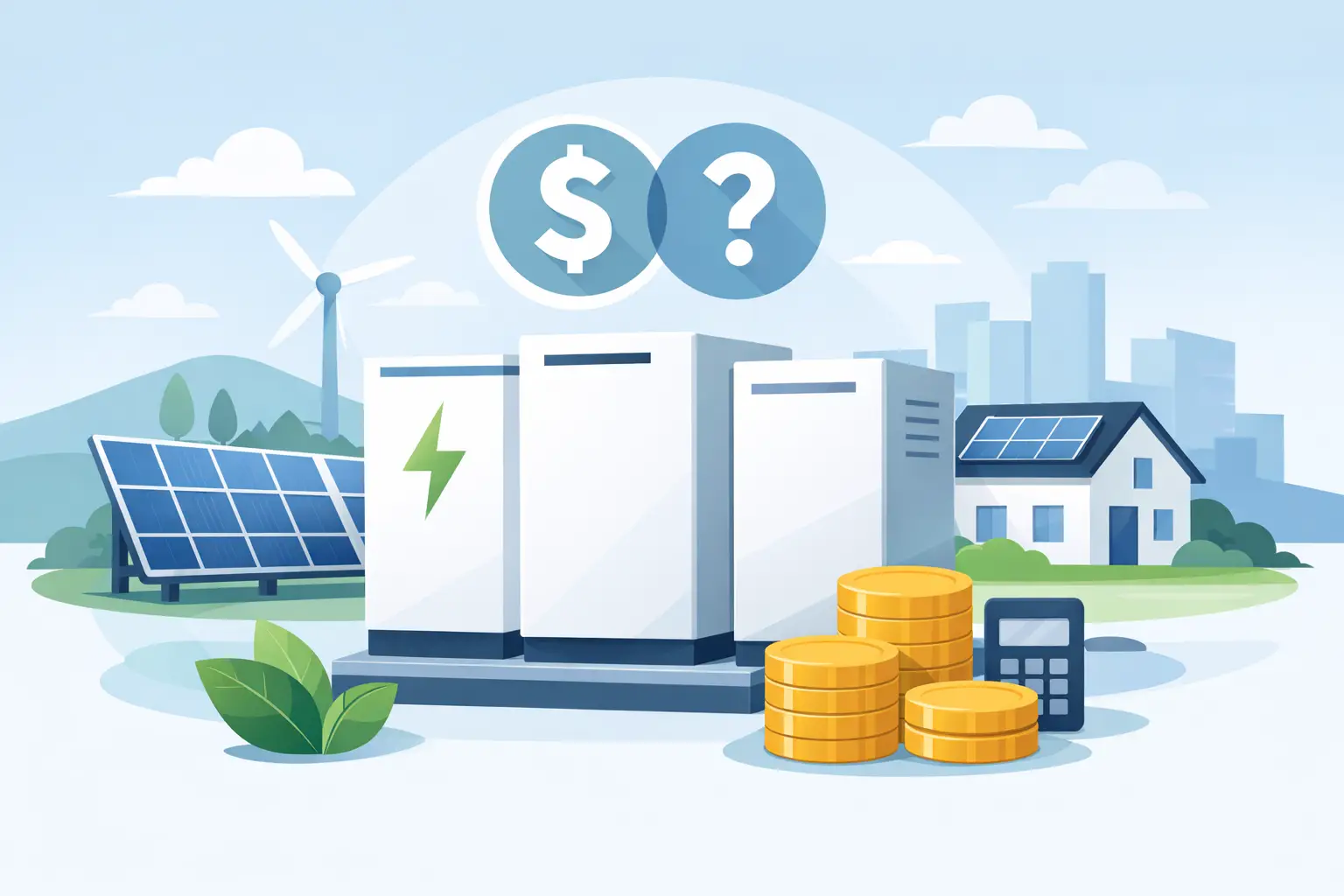
If you have looked at your electricity bills lately and thought, there must be a better way to use the power I generate or buy, you are not alone. One of the first questions people ask is how much are battery storage systems, and the honest answer is that the price can vary quite a bit depending on the size of the property, your energy habits, and whether the battery is being added to solar or installed on its own.
For most UK homes, battery storage usually starts at around a few thousand pounds and can rise well beyond that for larger or more advanced systems. That range sounds broad because battery pricing is not just about the battery itself. It includes storage capacity, inverter compatibility, installation complexity, backup capability, monitoring features, and the quality of the equipment and workmanship.
How much are battery storage systems in the UK?
As a practical guide, many homeowners in the UK will see installed prices in the region of £2,500 to £10,000 or more. Smaller entry-level systems with modest storage may sit at the lower end. Mid-range home battery systems, which are often the most popular for households with solar panels, commonly fall between £4,000 and £8,000. Larger systems designed for heavier evening use, higher daytime generation, or backup support can go beyond that.
For commercial properties, costs are usually higher because energy demand is higher, system design is more involved, and the battery may need to work harder across longer operating hours. In those cases, pricing can move well into five figures.
The key point is that battery storage is not a one-size-fits-all purchase. A low quote may look attractive, but if the system is too small for your usage or lacks the features you need, it may not deliver the savings or control you expect.
What affects battery storage system cost?
The biggest factor is capacity, usually measured in kilowatt-hours or kWh. A battery with a larger usable capacity can store more electricity for later use, so it will generally cost more. If your goal is simply to shift some solar energy into the evening, a smaller battery may be enough. If you want to run more of your home after sunset or reduce grid reliance further, you will likely need a larger one.
Battery chemistry also affects price. Most modern domestic systems use lithium-ion technology because it offers strong performance, good efficiency, and a relatively compact design. Within that category, there are differences in lifespan, charge cycles, safety profile, and cost. Better long-term performance can justify a higher upfront spend.
Installation setup matters too. Adding a battery to a new solar installation is often more straightforward than retrofitting one to an older system. If an inverter needs upgrading, consumer unit work is required, or cable routes are more complicated, labour and materials can push the price up.
Then there are the features. Some batteries are designed mainly for storing solar energy and reducing import from the grid. Others include backup functionality, intelligent tariff charging, app-based monitoring, or modular expansion. Those extras can be worthwhile, but they do add to the total cost.
The difference between battery price and system value
When people ask how much are battery storage systems, they are often really asking whether the spend is worth it. That is the better question.
A battery should be judged by the value it gives you over time, not just the number on the quote. If it helps you use more of your own solar power, buy less electricity at peak rates, and gain more control over when you draw from the grid, it can make a meaningful difference to long-term running costs.
That said, returns depend on your usage pattern. Homes that use a lot of electricity in the evening often benefit more because they can store daytime generation and use it when electricity would otherwise be bought at a higher cost. Households that are empty all day and active at night tend to see the most obvious gains from pairing solar with battery storage.
If your daytime consumption is already high, the battery may still help, but the savings can look different because more of your solar generation is used directly rather than stored.
Battery size matters more than most people expect
It is tempting to think bigger is always better, but oversizing a battery can reduce the value of the investment. If your system is too large for your solar output or daily usage, a portion of that capacity may sit underused for much of the year.
On the other hand, going too small can leave savings on the table. You may fill the battery quickly and still export excess solar during the day, only to import electricity again later in the evening.
This is why proper system design matters. The right battery size should be based on your generation profile, your evening and overnight demand, and whether you want the battery mainly for bill reduction, backup, or both. A tailored recommendation is usually far more useful than a generic package price.
Are battery storage systems cheaper with solar?
In many cases, yes. Installing battery storage alongside a new solar system can be more cost-effective than adding it later. The design can be planned as one complete system, installation work can be coordinated in one visit, and component compatibility can be addressed from the start.
There is also a bigger financial benefit when the battery is charged by your own solar generation. Without solar, a battery may still offer value by charging on cheaper off-peak tariffs and discharging when rates are higher, but the economics are different. With solar, you are storing electricity you have generated on site, which gives you more control and a stronger sense of energy independence.
For many households, this is where battery storage becomes the smartest home investment you can make. It helps turn more of your solar generation into usable power for your home, rather than sending it back to the grid at times when you would rather keep it.
What should be included in the price?
A battery quote should cover more than just the unit mounted on the wall. You should expect clarity on equipment specification, usable capacity, inverter arrangement, installation labour, electrical works, commissioning, monitoring setup, and warranty terms.
It is also worth checking who is carrying out the installation and what support looks like afterwards. A professionally designed system installed by qualified engineers gives confidence that the battery will work properly with the rest of your setup and continue to perform as expected.
This is one area where choosing on price alone can be risky. Battery systems are long-term assets. Good advice, safe installation, reliable components, and responsive aftercare all have real value.
How much are battery storage systems for businesses?
For commercial sites, the answer depends even more heavily on usage. A small office with modest demand is very different from a warehouse, workshop, farm building, or retail premises with higher daily loads. Commercial batteries may be sized to reduce peak demand charges, improve on-site use of solar generation, or support business continuity.
Because commercial systems often involve three-phase supplies, more detailed load analysis, and larger storage capacities, costs can rise quickly. However, so can the potential benefit. Businesses with predictable usage patterns and significant daytime generation often have a strong case for battery storage, especially where energy costs are a major overhead.
Is now a good time to invest?
For many property owners, yes, but it depends on what you want the system to achieve. If your priority is cutting bills, using more of your solar power, and gaining greater control over energy use, battery storage is increasingly attractive. If you are looking for the shortest possible payback, the figures need to be assessed carefully against your actual usage and tariff structure.
The market has matured a lot. Products are better, monitoring is clearer, and system design is far more refined than it was a few years ago. That makes it easier to build a system around real household or business needs rather than guesswork.
At Infused Solar Energy, we see the best results when battery storage is treated as part of a complete energy strategy, not just an add-on. When the system is sized properly and installed with care, it gives you something every property owner wants more of – control.
What to ask before you buy
Before agreeing to any system, ask how much usable storage you are getting, how the battery will be charged, what savings assumptions are being used, and whether the system can be expanded later. You should also ask about warranty length, monitoring, and what happens if support is needed after installation.
A good installer will answer clearly, without hiding behind jargon. That matters because the best battery system is not the one with the biggest headline number. It is the one that matches the way you actually live or work.
If you are weighing up the numbers, remember this: the cheapest battery is not always the most affordable over time, and the most expensive one is not automatically the best fit. The right system should feel measured, sensible, and built around helping you own your energy with more confidence every day.