If your electricity bills seem to rise every time you look at them, solar starts to feel less like a nice idea and more like a sensible home upgrade. That is usually the point homeowners ask, how does residential solar work, and whether it will genuinely make a difference to their monthly costs. The good news is that the basics are straightforward. Your roof captures daylight, your system converts it into usable electricity, and your home uses that power before buying more from the grid.
What makes solar appealing is not just the technology. It is the control. Instead of relying entirely on imported electricity, you produce part of your own energy on-site. For many UK households, that means lower bills, better protection against future price rises and a home improvement that keeps delivering long after installation day.
How does residential solar work in simple terms?
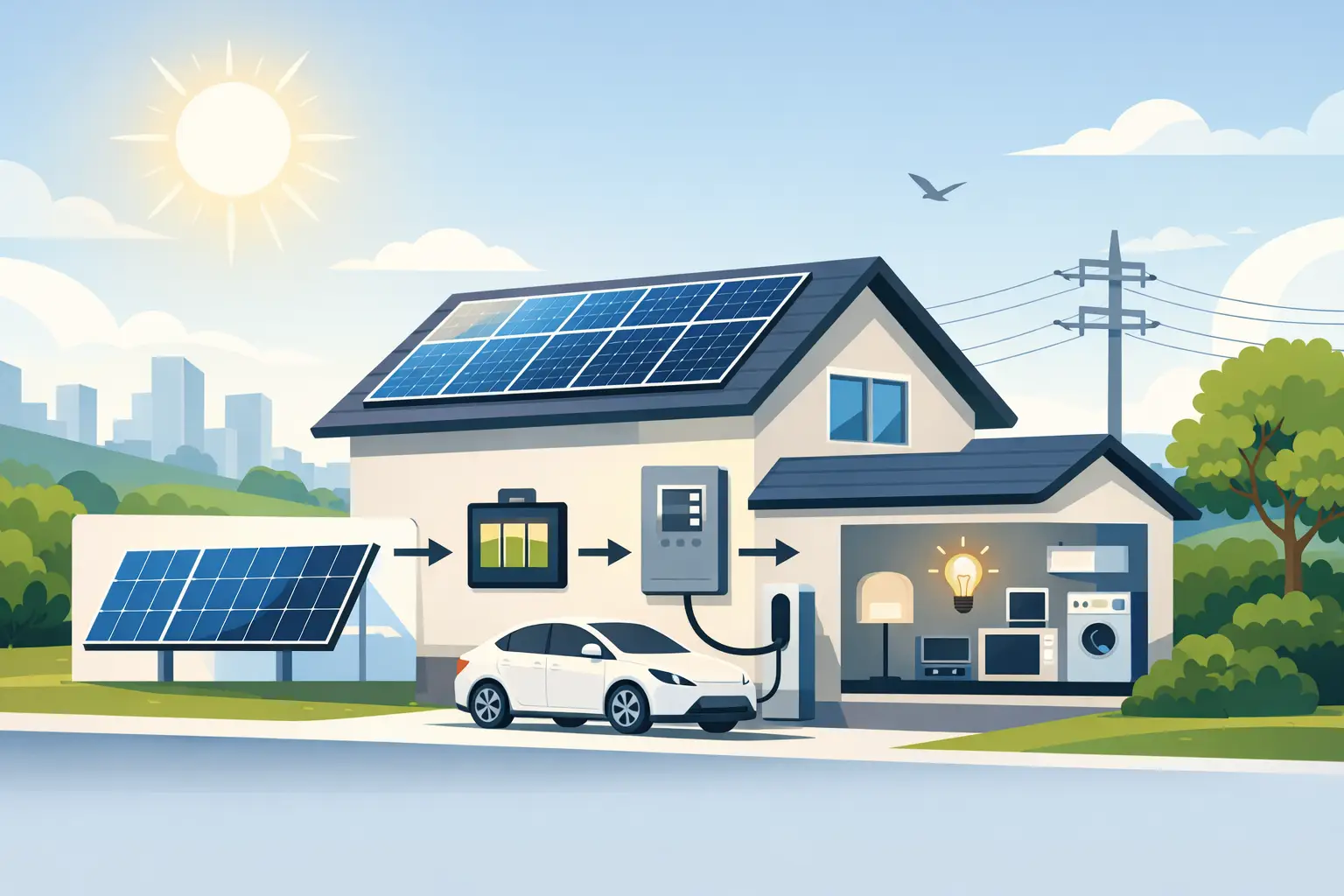
A residential solar system turns sunlight into electricity your home can use. The panels on your roof generate direct current, often shortened to DC. Because homes use alternating current, or AC, that electricity passes through an inverter, which converts it into a form your appliances can use safely.
Once that power is available, your property will use the solar electricity first. If the kettle is on, the washing machine is running and someone is working from home, your solar generation can help cover those demands. If your panels are producing more than the house needs at that moment, the extra electricity can either charge a battery, if you have one, or be exported to the grid.
At night, or during lower-generation periods, your home simply draws from the grid as normal. Solar does not mean disconnecting from the electricity network. For most households, it means reducing how much power you need to buy.
The main parts of a home solar system
The panels are the most visible part of the system, but they are only one piece of the picture. A well-designed residential setup usually includes solar panels, an inverter, a mounting system, cabling, generation monitoring and, in some cases, a battery.
Solar panels collect daylight and produce electricity. They do not need bright summer heat to work, which is a common misunderstanding. They generate from daylight rather than temperature, so they still produce power on cloudy days, just at a lower level than they would in strong sunshine.
The inverter is the working heart of the system. It converts the electricity into a usable format for your home and often provides performance data as well. Good monitoring matters because it lets you see what your system is generating and helps identify any faults quickly.
If you choose battery storage, that adds another layer of flexibility. Instead of sending spare power straight back to the grid, the system stores some of it for later use. That can be especially useful in the evening, when many households use more electricity but solar generation has dropped off.
What happens during a normal day?
The easiest way to understand solar is to imagine a typical day at home. In the morning, as daylight increases, the panels start generating. Early output may be modest, but it builds through the day. If someone is home and using appliances while the system is generating, that electricity can be consumed immediately.
Around midday, output often peaks, depending on the weather, season, roof angle and system design. If your daytime electricity use is low, a larger share of that generation may be exported unless you have a battery or schedule appliances to run then.
By late afternoon and evening, generation falls away. At that point, a battery can provide stored energy if one is installed. Without a battery, the home returns to drawing more from the grid.
This is why solar savings are partly about the system itself and partly about how your household uses electricity. Two homes with the same number of panels can see different financial results if one uses more power during the day and the other uses most of it after sunset.
Does residential solar work in the UK?
Yes, it does. The UK is not the sunniest country in the world, but residential solar still performs well enough to be a worthwhile investment for many homeowners. Modern panels are efficient, and system design has improved significantly. A properly sized system on a suitable roof can generate meaningful savings over time.
That said, not every roof delivers the same outcome. South-facing roofs usually offer the strongest generation, but east and west-facing roofs can also work well. Shading from trees, chimneys or neighbouring properties can reduce output, so a proper site survey matters.
This is where homeowners benefit from clear, honest advice. A good installer should not treat every property as if it is identical. The shape of the roof, the available space, the household’s electricity use and whether battery storage is planned all influence the best design.
How do you save money with solar?
The biggest saving comes from using the electricity you generate instead of buying that electricity from your supplier. Every unit of solar power you use at home is a unit you do not need to import at the retail rate. That is usually where the strongest financial value sits.
There can also be value in exporting unused electricity to the grid, depending on your tariff. Export payments can improve the overall return, but for many households they are secondary to self-consumption. In simple terms, the more of your own solar electricity you use, the better the economics tend to look.
Battery storage can improve this further, especially for households that are out during the day. Without a battery, much of the daytime surplus may leave the home unused. With one, you can hold some of that energy back for the evening, when lights, cooking and entertainment systems increase demand.
Still, battery storage is not automatically right for everyone. It adds cost upfront, so the question is whether the added flexibility and bill savings justify that investment for your usage pattern.
What affects solar performance?
Several factors shape how well a system performs. Roof orientation is one. Shading is another. Panel quality, inverter quality and installation standards also make a real difference.
System size matters too. A system that is too small may leave savings on the table. One that is too large for your usage can still be valuable, but you may export more electricity than you would ideally like if there is no battery or daytime demand to absorb it.
Seasonality is worth understanding as well. In the UK, solar production is higher in spring and summer and lower in winter. That does not mean winter generation stops. It simply means annual performance should be viewed across the full year rather than judged on one grey week in January.
This is often where expectations need to be realistic. Solar is a long-term investment, not a shortcut to zero bills in every month of the year. A well-designed system can reduce your reliance on the grid significantly, but exact results depend on your property and your habits.
What is the installation process like?
For most homeowners, the practical question sits right behind the technical one. They do not just want to know how does residential solar work. They want to know what happens next if they decide to go ahead.
A professional installation usually starts with a survey and design stage. This is where roof suitability, energy usage and system sizing are assessed. Once the design is agreed, the installation itself is often completed quickly, sometimes within a day for straightforward domestic systems.
After fitting the panels, inverter and any battery equipment, the system is tested and commissioned. Monitoring is set up so you can see performance clearly, and you should be given a handover that explains how the system operates, what to expect through the seasons and what support is available afterwards.
That aftercare matters more than many people realise. Solar is low maintenance, but it should not feel like a mystery once the installers leave. Homeowners want to know there is proper backup, clear communication and qualified support if they have questions down the line. That full-service approach is one reason many households prefer a company like Infused Solar Energy rather than trying to piece the process together themselves.
Is residential solar worth it?
For many UK homeowners, yes. If your goal is to reduce electricity bills, add resilience to your household energy setup and invest in a cleaner way to power your home, solar is often a strong option. It is especially attractive if you expect to stay in the property for years rather than months.
The answer becomes more nuanced if your roof is heavily shaded, your daytime usage is very low or your budget is tight enough that the upfront cost feels uncomfortable. Solar is not a one-size-fits-all product, and a trustworthy installer should say so.
But where the property is suitable and the system is designed properly, residential solar can be one of the smartest home investments you can make. It gives you more than panels on a roof. It gives you a practical way to own more of your energy future, one daylight hour at a time.
If you are weighing it up for your own home, the most useful next step is not guessing from someone else’s figures. It is getting clear advice based on your roof, your usage and what you want your system to do for you.