A bright afternoon can produce more solar electricity than your home is using at that moment. Without a battery, that surplus is usually exported to the grid. With one, it can be saved for the kettle, cooking, washing or evening lighting instead. So, can solar panels charge batteries? Yes: and for many UK households, pairing solar with battery storage is the practical next step towards using more of the energy they generate.
The key is that the panels, inverter and battery must be designed to work together. A well-specified system does more than store spare power: it helps you buy less electricity at peak times, gives you clearer control over your usage and makes your solar investment work harder throughout the year.
How solar panels charge a home battery
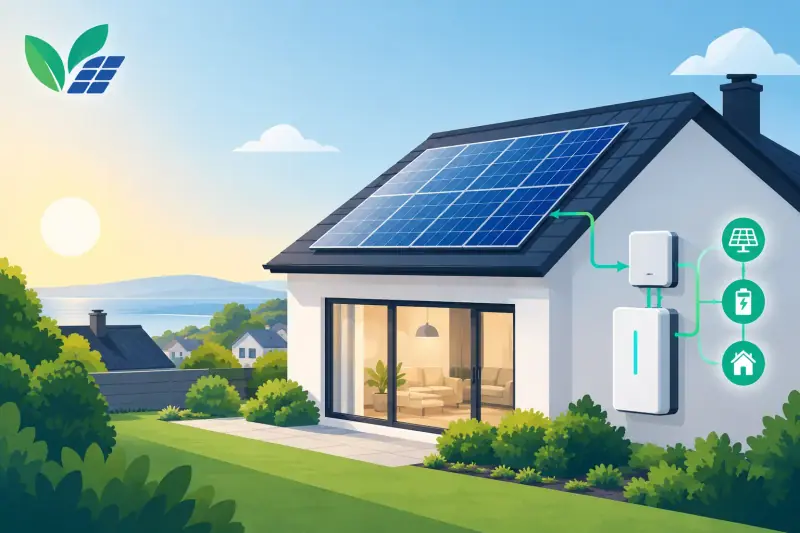
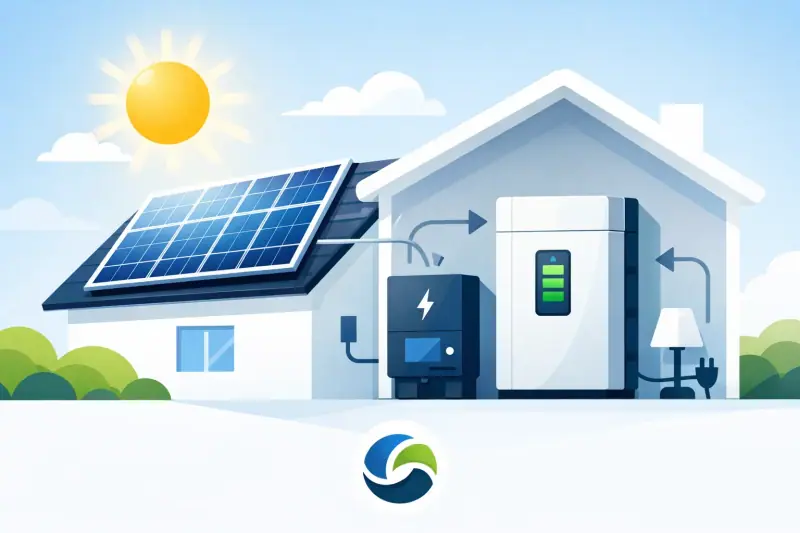
Solar panels generate direct current, known as DC electricity. Your home runs on alternating current, or AC, so an inverter is needed to make solar power usable by your appliances. A battery can store electricity as DC, but the exact route the power takes depends on the equipment installed.
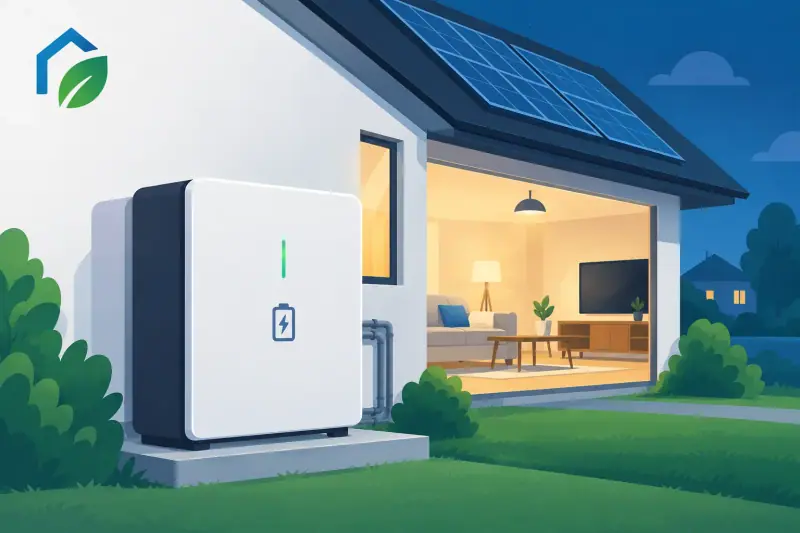
In a typical modern installation, your solar generation is used by the property first. If the panels are producing more than the home needs, the remaining electricity is directed into the battery. Once the battery reaches its set charge limit, any further surplus can be exported to the grid. When generation falls later in the day, the battery discharges to cover household demand before you need to import electricity.
This all happens automatically. You do not need to switch the battery on when the sun appears or decide which appliance it should run. Monitoring software lets you see the flow of energy, but a good system is set up to make sensible decisions in the background.
DC-coupled and AC-coupled storage
There are two common ways to connect a battery. A DC-coupled battery is integrated with a hybrid inverter, allowing solar electricity to charge the battery before it is converted for use in the home. This can be an efficient choice for a new solar and battery installation.
An AC-coupled battery connects on the AC side of an existing solar system. It is often suitable when homeowners want to add storage to panels that are already installed. Electricity passes through conversion stages when charging and discharging, but it can be a straightforward, flexible upgrade. Neither option is automatically right for every property. Your existing equipment, roof output, energy use and future plans all matter.
Can solar panels charge batteries fast enough?
They can, but charging speed changes constantly. It depends on how much solar power is available after the home’s immediate demand has been met, as well as the battery’s maximum charge rate.
For example, a 5 kW solar array may generate close to that figure in excellent summer conditions, but it will not do so all day and it will produce far less on a heavily overcast winter day. If your home is using 1 kW and the panels are producing 4 kW, roughly 3 kW is available for battery charging, subject to the inverter and battery limits.
Battery capacity is measured in kilowatt-hours, or kWh. A 10 kWh battery can hold more energy than a 5 kWh model, but it does not necessarily charge twice as quickly. That depends on its charge power, measured in kW. A battery that accepts 2.5 kW will take around four hours to add 10 kWh in ideal conditions, while real-world charging varies with generation, household consumption and charging losses.
Summer often brings enough surplus solar to fill a correctly sized domestic battery on many days. Winter is different. Shorter days, low sun angles and cloud cover mean a battery may only receive a partial solar charge, particularly if the home uses electricity during daylight hours. Storage still has value then, but expectations should be based on annual performance rather than a perfect July day.
What determines how much solar energy you can store?
The best battery is not simply the largest one available. An oversized battery may spend much of the year only partly charged, while an undersized model can fill early and leave valuable solar energy to export. The right balance comes from looking at the property as a whole.
Your solar array size and orientation set the starting point. South-facing panels generally produce strongly across the middle of the day, while east and west-facing arrays can spread generation more evenly across morning and afternoon. Shading, roof angle and local conditions also affect output.
Your electricity use matters just as much. A household that is empty during the day and uses most of its power after 5 pm may benefit significantly from storage. A home with high daytime consumption, such as a busy household, home office or electrically heated water system, may use more solar directly and need a different battery size.
Other factors that influence the recommendation include:
- the battery’s usable capacity rather than its headline capacity
- its charge and discharge power
- its depth-of-discharge settings and expected lifespan
- whether you plan to add an electric vehicle, heat pump or electric heating
- the export tariff and off-peak import tariff available to you
A site survey and a review of actual consumption patterns are more useful than choosing a battery based on a single bill or a neighbour’s system. Bespoke design helps ensure the system supports the way you live now, while leaving room for sensible future upgrades.
Solar charging versus off-peak grid charging
A battery does not have to charge only from solar panels. Many systems can also charge from the grid during cheaper overnight periods, then supply the home when daytime electricity prices are higher. This can be particularly useful in winter, when solar generation is lower.
The best operating strategy depends on your tariff and your priorities. Some homeowners want to maximise self-consumption of clean solar electricity. Others combine solar charging with time-of-use tariffs to reduce costs across the year. In either case, settings need careful attention. Charging a battery from the grid at the wrong time could reduce savings, and certain export tariff arrangements may have conditions around grid-charged energy.
A properly configured system can reserve capacity for expected evening demand, prioritise solar when it is available and use low-cost charging when it makes financial sense. The goal is not to chase a single daily figure; it is to reduce costly grid imports over time.
Will a battery keep your home powered in a power cut?
Not by default. Most standard solar and battery systems switch off during a grid outage for safety reasons. This prevents electricity being fed back into the network while engineers may be working on it.
If backup power is important, it needs to be included in the design. Some battery systems can provide a dedicated backup circuit or, with suitable equipment, support more of the home during an outage. There are trade-offs: backup capability can add cost, and high-demand appliances such as electric showers, ovens and heat pumps may require careful load management.
It is also worth remembering that solar panels alone do not guarantee daytime power during a cut. The inverter and battery must be designed with backup functionality, and the system must be installed and commissioned correctly.
Why professional design matters
Home battery storage involves high-voltage equipment, electrical protection, inverter settings and compliance with network requirements. It is not simply a case of connecting a battery to existing panels. A professional installer will assess the property, model expected generation and usage, confirm the best connection method and set up monitoring so performance remains visible.
For UK homeowners, choosing an MCS-certified installer can also support confidence in the quality and documentation of the solar installation. Clear handover information matters too: you should understand what your system is designed to do, how to read the monitoring app and who to contact if you need support.
At Infused Solar Energy, the focus is on designing the full system around the property rather than treating battery storage as an off-the-shelf add-on. That means considering the panels, inverter, household demand and long-term plans together.
A battery should fit your life, not just your roof
Solar panels can charge batteries very effectively, but the strongest results come from matching storage to real energy habits. A family cooking and charging devices in the evening has different needs from a business with consistent daytime demand. Your roof may have the capacity for more panels, but the right next investment could be a larger battery, a tariff change or better monitoring.
The useful question is not only whether a battery can fill on a sunny day. It is how much of the electricity you generate can be used when it is most valuable to you. A tailored solar and storage design gives you a practical route to own more of your energy, with realistic expectations in every season.