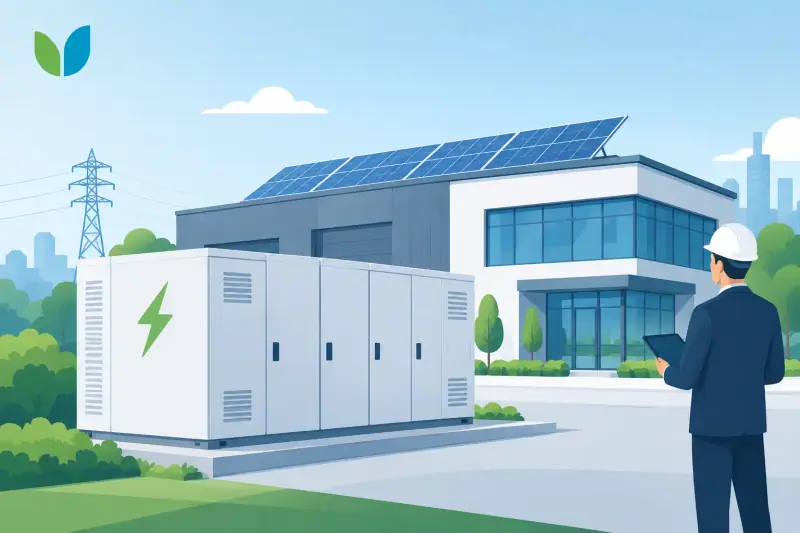
A business can produce plenty of solar electricity at midday and still buy expensive power later that evening. That gap is where business battery storage systems can make a meaningful difference. Rather than exporting surplus generation for a modest rate, a battery stores it for use when your site needs it most.
For many UK businesses, the value is not simply having backup power. It is gaining better control over when electricity is bought, used and, where appropriate, exported. A well-designed battery can reduce reliance on high-priced grid electricity, improve the return on an existing solar installation and provide greater confidence during periods of rising energy costs.
What a commercial battery system does
A commercial battery stores electrical energy for later use. It can charge from solar panels, the grid, or a combination of both, then discharge when your building demand is higher or electricity is more expensive.
The right operating strategy depends on your premises. A warehouse with daytime operations may prioritise storing excess solar for late-afternoon loading and office use. A restaurant, gym or retail site may benefit more from reducing sharp peaks in demand. An office that closes at 5pm may have less need for a large battery unless it has substantial overnight loads, electric vehicle charging or a requirement for resilience.
This is why battery capacity should never be selected from a simple rule of thumb. The best system is based on half-hourly consumption data, your load profile, solar generation pattern, tariff and future plans for the property.
How business battery storage systems reduce costs
The most obvious saving comes from solar self-consumption. Without storage, unused solar generation is often sent back to the grid. With a battery, more of that clean electricity can be kept on site and used later, reducing the electricity you need to import.
For businesses on time-of-use tariffs, batteries can also charge when grid electricity is cheaper and discharge during higher-cost periods. This is often called tariff optimisation. It can be particularly useful where solar production alone does not align with the times your business uses the most energy.
A third opportunity is peak shaving. Some commercial bills are affected not only by total energy use but also by periods of high demand. If several pieces of equipment start at once, or EV chargers operate alongside heating, cooling or machinery, a battery can support the site for short periods and reduce the import peak. The savings available depend on your tariff structure, so this must be modelled rather than assumed.
Battery storage can also protect against the cost of operational disruption. For businesses with refrigeration, IT equipment, security systems, communications or sensitive processes, even a short interruption can be costly. A battery may be configured to support selected essential circuits during an outage, but this requires careful design. Not every battery automatically provides backup power, and the amount of load it can support is limited by both its usable capacity and power output.
Is battery storage right for your business?
Battery storage is most compelling where there is a clear mismatch between when energy is generated and when it is used. It can be a strong fit for premises with solar panels, high electricity consumption, variable tariffs or regular demand peaks.
It may also be worthwhile for a business planning to install solar for the first time. Designing solar and battery storage together allows the system to be sized around the building’s real energy needs. The result is usually more practical than adding a battery later without reviewing the wider system.
However, storage is not automatically the right answer for every site. A building with low evening use, little spare solar generation and a flat tariff may see a slower payback. Equally, if a business needs long-duration backup for an entire premises, a battery-only solution can become expensive. In that case, essential-load backup, energy-efficiency improvements or another resilience measure may be more suitable.
An honest proposal should explain these trade-offs clearly. Expected savings are estimates, not guarantees, because tariffs, weather, operating hours and future electricity prices all affect performance.
Choosing the right battery size
Battery systems are usually considered in two separate ways: energy capacity, measured in kilowatt-hours (kWh), and power, measured in kilowatts (kW).
Capacity tells you how much electricity the battery can store. Power tells you how quickly it can charge or discharge. Both matter. A large-capacity battery with limited output may not be able to support a sudden peak in machinery demand. A high-power battery with too little capacity may empty before the most expensive period of the day has passed.
A professional assessment will look at your interval data, existing solar output, building opening hours and equipment loads. It should also consider planned changes such as electric vehicle chargers, heat pumps, expanded production lines or a move to longer operating hours. Sizing for today alone can leave a system underpowered sooner than expected.
There are practical site considerations too. Commercial batteries need a suitable location, ventilation where required, safe access for installation and adequate electrical infrastructure. Fire safety, manufacturer clearances and the building’s layout all need to be reviewed before a design is finalised.
Grid approval, safety and installation
Commercial battery installation is not just a matter of fitting hardware. Depending on the system size and connection arrangement, approval from the local Distribution Network Operator may be required. This process confirms that the local network can accommodate the proposed equipment and sets out any conditions for connection or export.
Your installer should manage the technical detail, explain likely timescales and avoid promising a connection date before the necessary approvals are in place. Larger systems can require more detailed design work, but that preparation protects the safety and performance of the finished installation.
Quality installation also includes clear commissioning, monitoring setup and handover. Your team should understand what the system is designed to do, which loads are covered in backup mode if included, and how to view performance. Monitoring is especially valuable because it shows whether the battery is charging and discharging as expected and helps identify changes in site consumption.
What to ask before you invest
Before approving a commercial battery proposal, ask how the installer has calculated the recommended capacity and power rating. A meaningful answer should refer to your actual consumption data rather than a generic package.
You should also ask whether the figures include battery losses, how the system will operate on your electricity tariff, what happens during a power cut, and whether any export limits apply. Warranty terms deserve close attention as well. Look beyond the number of years offered and understand the expected usable capacity, throughput limits, maintenance requirements and what support is available if an issue occurs.
For businesses with solar already installed, it is worth checking whether the existing inverter is compatible with the proposed storage solution. Some systems can be integrated neatly, while others may need additional equipment or a different design approach. Compatibility is a technical question, but it has a direct effect on cost, reliability and future maintenance.
A system that works with your business
The strongest case for storage is not a brochure figure. It is a system designed around the way your business actually operates: when the lights come on, when equipment runs, when solar production is highest and where expensive imports occur.
At Infused Solar Energy, that starts with understanding the property and its energy use before recommending equipment. A properly surveyed, professionally installed system can help you use more of the electricity you generate and make each unit of energy work harder for your business.
If you are considering battery storage, begin with your consumption data and future plans. Those two details will do more to shape a sensible investment than any standard battery package ever could.